test
test test
test test
test test

Dialpad automatically generates full conversation transcription, tracks action items, and identifies keywords. They can also use ChatSpot or Gong to automatically capture and transcribe sales calls. These reps then have the much-needed context to close deals faster while saving them time they’d have otherwise spent taking notes.
Mark contributions as unhelpful if you find them irrelevant or not valuable to the article. Conversational AI replaces humans in live conversations with clients, generally as chatbots. As experts in sales technology (we hope), we’ve seen first-hand how Artificial Intelligence (AI) has revolutionized the sales industry. artificial intelligence for sales Organizations must set the infrastructure to enable artificial intelligence to reap the most significant benefit. Participatory and sales agents must have the resources to learn and adjust to their new duties. Early AI programs must have a reasonable possibility of success within six to twelve months.
It’s no secret that computers are better at automatically organizing and processing large amounts of information. Artificial intelligence has advanced to the point where it can also recognize where change is needed and initiate those changes without human intervention. The ability for AI technology to improve on its own over time is called machine learning. Here at Marketing AI Institute, we have tons of sales reps in our audience.
As you can already guess, algorithms analyze vast datasets to create personalized content recommendations, suggest optimal send times, and come up with subject line options. AI here is like a fortune teller, predicting which email content is likely to resonate with your target audience. As any sales rep knows, it can be difficult to identify which lead is worth your time and should be prioritized over others.
Apollo is a sales intelligence platform with a massive database of over 60 million companies and 260 million contacts. Sales teams use this platform to not only get their hands on information about their potential customers but also connect with them. Last but not least, sales teams can integrate ChatSpot, a conversational AI bot, with their HubSpot CRM to unlock a wide range of possibilities.
Autopopulate contacts and relevant information to help build strong relationships with key decision makers. Drive productivity, accelerate decision making, close faster, and strengthen relationships. As you can see, artificial intelligence is not just another stale programmers’ offspring. It is rather a full-blown technological concept that allows solving and optimizing the widest scope of various tasks. Tesla, with its convenient autopilot, has already saved the life of a drunk driver, which says a lot. AI is quite an expansive and maybe even vague concept that initially appeared back in 1956.

AI bridges the gap between sales and marketing teams, aligning their workflows and strategies. It ensures both teams are in sync, from lead generation through social media campaigns to the final sales call, ultimately amplifying overall sales performance. Within this broader context, AI plays a pivotal role in sales, enhancing the way sales teams function.
If AI algorithms are not transparent, which is often the case, it can lead to mistrust among customers and sales teams. You should understand and be ready to explain how decisions are made by AI models. In this section, let’s explore the objectives and methods sales teams can adopt AI for. I’ll share the key approaches and AI artificial intelligence tools to equip your team.
And, it’s this customer-centric approach that sets them apart from the competition. It can improve targeting, identify new opportunities, automate activities like upselling, and utilize tools for lead scoring and analyzing intent data. In the context of AI in sales, machine learning algorithms are often trained on historical sales data. They learn from past transactions, customer interactions, product information, and many other variables to understand patterns and correlations. Generative AI can generate personalized call scripts for discovery and demo calls based on a sales rep’s unique selling style and the prospect’s specific needs.
AI enables personalized lead nurturing at scale, delivering tailored content and experiences based on individual preferences and behavior. You can also use artificial intelligence to help you maximize the use of your sales intelligence solutions and your customer relationship management (CRM) platform. With sales AI, you can see how likely you are to close a deal, predict how many new deals or churns within a given period, and more. By using AI, your sales team will be more informed, so they can make better decisions.

It combines NLP, machine learning, and text mining to enhance data analysis processes. Historically, sales reports and projections were largely based on intuition. Since most sales data is multivariate and siloed in different systems (e.g., CRM, marketing automation, ecommerce platform), it was difficult to accurately predict future sales performance.
You can foun additiona information about ai customer service and artificial intelligence and NLP. AI can also play a vital role in providing sales teams with intelligent recommendations to improve their sales strategies. By analyzing customer data and past sales performance, AI algorithms can suggest the most relevant products or services for each customer. AI algorithms have the ability to process vast amounts of data and extract valuable insights. This enables businesses to make more accurate sales predictions than ever before. In the ever-evolving world of sales, staying ahead of the game is crucial. With the rapid advancements in technology, artificial intelligence (AI) has emerged as a powerful tool that can revolutionize sales forecasting and predictive analytics.
If any of these use cases resonate with your sales team, it’s time to start looking for the right AI solution. Here are a few acclaimed AI Sales tools your organization can leverage. Sell’s all-in-one platform lets you build meaningful customer relationships without employing an entire army of salespeople.
Thus, such efficiency indicators as the speed of task handling, the volume of memory consumed, and dispersion of analyzed types of data are important in the modern business realities. As you may have already understood, AI products are based on artificial neural networks (ANN). Artificial intelligence in sales (or any industry for that matter) relies on data. Simplify even the most complex commission processes and challenges in no time. Implement robust cybersecurity measures and educate your team on the importance of data privacy. Sales reps can then adjust prices accordingly to attract customers while maintaining profitability.

ActiveCampaign combines email marketing, marketing automation, and CRM functionalities. It helps sales teams nurture and convert leads effectively by providing insights, automating tasks, and delivering personalized communications. With AI-driven sales forecasting and predictive analytics, businesses can gain a deeper understanding of their customers, markets, and sales performance. Predictive sales AI has the ability to process and analyze vast amounts of data, giving sales teams actionable insights into customer behavior, sales performance, and market trends. With this granular data, business leaders can make more informed decisions around brand positioning and product offerings to keep up with current customer needs and preferences. With an average sales rep only spending 33% of their time actively selling, we can all agree that sales teams need more efficiency in their daily processes.
Quickly generate concise, actionable summaries from your sales calls or ask Einstein to identify important takeaways and customer sentiment so you have the context you need to move deals forward. We also evaluated the quality of reporting tools and the ability to personalize the software. We checked whether it offers data-driven support and integrates with other tools. To select the best AI sales tool for your organization, you must first evaluate your needs.
When provided with the right inputs, these tools can help you generate resonating sales pitches, proposals, and other content. Of sales professionals using generative AI tools for writing messages to prospects, 86% have reported that it is very effective. With intelligent customer segmentation, businesses can personalize their interactions and deliver relevant content to each customer segment. This not only improves customer satisfaction but also increases the likelihood of conversions and repeat business. Once leads have been identified, the next step is nurturing them towards a purchase decision.
Pipedrive’s AI sales assistant acts as an automated sales expert, helping sales teams analyze their past sales performance, provide recommendations, and improve sales to boost revenue. By leveraging AI, sales teams can better understand customer behavior, preferences, and needs, allowing them to create targeted email campaigns, improve lead qualification, and optimize sales processes. Solutions like predictive sales AI and fast outreach AI can help speed up the time to close with smarter predictions around purchase intentions of prospects. By learning from historical data and the information provided about the potential customer, AI algorithms can essentially tell sales teams which action is most sensible. These AI-powered sales recommendations empower sales teams to offer personalized solutions that resonate with customers, ultimately leading to higher conversion rates. By leveraging AI’s ability to process vast amounts of data quickly and accurately, businesses can provide a seamless and tailored sales experience to their customers.
They become more adaptable in their dealings with numerous stakeholders who represent diverse viewpoints and interests. First, identify the many sorts of data sets within a company that you can integrate to create a more comprehensive picture of the client base. The sales department, for example, has historical purchase data, while the marketing department has website analytics and promotional campaign data. Managers and salespeople need insights, and these solutions provide them automatically.
A Hubspot survey found that 61% of sales teams that exceeded their revenue goals leveraged automation in their sales processes. It also means less reliance on human personnel, which can be hard to retain in a competitive job market. A vast amount of time and energy goes into summarizing what was discussed on each sales call, then creating action items for sales teams based on the content of the call. Plus, WebFX’s implementation and consulting services help you build your ideal tech stack and make the most of your technology. AI enables you to quickly analyze and pull insights from large data sets about your leads, customers, sales process, and more. You can use these insights to continually improve your sales processes and techniques.
If the basic software mechanism isn’t perfected enough, the end result of its operation may lead to not only additional expenses, but also to some personal harm (like autopilot system failures). Sales commissions are a vital component of variable compensation and are critical in motivating sales teams. According to Deloitte, the top AI use cases across the sales process span territory and quota optimization, forecasting, performance management, commission insights, and more (pictured below). The future will likely hold many other applications for sales AI, and the landscape is moving fast — making it even more crucial for your organization to take advantage of this technology quickly. Let’s explore some concrete benefits that AI in sales offers businesses.
All these AI use cases translate to improved sales team enablement, providing them with the resources they need to enhance performance. From lead generation to segmentation, lead scoring and analytics, AI empowers your team, giving them insight that helps them to close deals, upsell, cross-sell, and more. Artificial Intelligence enables accurate and effective sales forecasting based upon earlier sales results and current customer contacts. It allows business leaders and sales reps to make smarter business decisions when laying out goals, prospecting, and budgeting. The average sales rep spends only 28 percent of their workweek selling.
Conversational AI for sales uses NLP to receive and analyze input from customers through a text or voice interface. Basically, conversational AI for sales is any program that lets customers interact with your company in a way that feels human—even when half of the conversation is being handled by a computer program. In this article, we’ll discuss the different roles of AI for sales reps, and explore its current capabilities and where it’s headed.
Executives or sales leaders should let their employees know that AI tools are here to assist, rather than replace people. Exceed.ai’s sales assistant helps engage your prospects by automatically interacting with leads. Additionally, it answers questions, responds to requests, and handles objections automatically. The platform offers a wide range of pre-built templates, allowing the users to stitch personalized intros with pre-recorded videos, and more.
Artificial Intelligence for Natural Salespeople: Unveiling WINN.AI’s Sales Content Hub.
Posted: Tue, 16 Jan 2024 08:00:00 GMT [source]
Drift offers hyper-intelligent conversational AI chatbots that are of huge benefit to salespeople. Using Drift’s AI, you can automatically converse with, learn from, and qualify incoming leads. That’s because Drift’s chatbots engage with leads 24/7 and score them based on their quality, so no good lead falls through the cracks because you lack a human rep manning chat. AI helps you to automate aspects of your sales process and provide your team with better information about leads, enhance sales techniques with personalization, and more. Monitoring your sales team’s performance and providing them with additional training when needed to remain successful can be costly and time-consuming. Now, sales managers can leverage the power of artificial intelligence to keep an eye on team members’ performance and equip them with additional knowledge.
Darwin AI gives small LatAm companies AI-powered sales assistant.
Posted: Mon, 26 Feb 2024 14:02:44 GMT [source]
That includes AI, of course, to optimize customer interactions and drive business outcomes. However, there’s a subtle difference in AI tools for sales and marketing. The ones who offer competitive prices can naturally win more customers. Thus, many companies are embracing price optimization tools to streamline the process. These tools can drive an increase in sales due to the use of artificial intelligence that analyzes a range of factors to determine the most effective pricing strategy. These factors include market demand, competitor pricing, historical sales data, customer behavior, and more.
According to IBM, artificial intelligence, often referred to as AI, is “a field, which combines computer science and robust datasets, to enable problem-solving.” The truth is, most people use AI tools every day without even realizing it. There are plenty of apps you can use to supercharge your daily workflows.
But these tools often augment human salespeople rather than replace them. In fact, AI tools are increasingly taking over work that human salespeople don’t have the ability or the time to do. With Trender.ai, any sales professionals can automate the process of finding top leads across the social web by giving the tool’s AI your ICP. The tool also provides AI-powered research capabilities that surface deep insights about these leads, so you can close them more effectively.
We assessed the cost of the software and its affordability for businesses of different sizes. We considered the cost of the AI sales software, including the availability of a free trial, affordability of the subscription plans, and pricing tiers. The AI tool can humanize videos by automatically adding personalized elements. This level of personalization can significantly impact viewer engagement and response rates.
A significant benefit of artificial intelligence in sales is that it can help you improve your sales pipeline management. Your sales pipeline is a crucial component of getting people to turn from prospects to customers. Sales AI involves using tools that leverage artificial intelligence to help you refine your sales process and increase revenue.

Indeed, programmers used punch cards to communicate with the first computers 70 years ago. This manual and arduous process was understood by a relatively small number of people. Now you can say, “Alexa, I like this song,” and a device playing music in your home will lower the volume and reply, “OK. Then it adapts its algorithm to play that song – and others like it – the next time you listen to that music station. A great NLU solution will create a well-developed interdependent network of data & responses, allowing specific insights to trigger actions automatically.

Some content creators are wary of a technology that replaces human writers and editors. Still, NLU is based on sentiment analysis, as in its attempts to identify the real intent of human words, whichever language they are spoken in. This is quite challenging and makes NLU a relatively new phenomenon compared to traditional NLP. Our conversational AI uses machine learning and spell correction to easily interpret misspelled messages from customers, even if their language is remarkably sub-par. Instead they are different parts of the same process of natural language elaboration. More precisely, it is a subset of the understanding and comprehension part of natural language processing.
By combining their strengths, businesses can create more human-like interactions and deliver personalized experiences that cater to their customers’ diverse needs. This integration of language technologies is driving innovation and improving user experiences across various industries. NLP and NLU have unique strengths and applications as mentioned above, but their true power lies in their combined use. Integrating both technologies allows AI systems to process and understand natural language more accurately. However, the full potential of NLP cannot be realized without the support of NLU.
The problem is that human intent is often not presented in words, and if we only use NLP algorithms, there is a high risk of inaccurate answers. NLP has several different functions to judge the text, including lemmatisation and tokenisation. Whether it’s simple chatbots or sophisticated AI assistants, NLP is an integral part of the conversational app building process. And the difference between NLP and NLU is important to remember when building a conversational app because it impacts how well the app interprets what was said and meant by users. It’s likely that you already have enough data to train the algorithms
Google may be the most prolific producer of successful NLU applications. The reason why its search, machine translation and ad recommendation work so well is because Google has access to huge data sets.
You can type text or upload whole documents and receive translations in dozens of languages using machine translation tools. Google Translate even includes optical character recognition (OCR) software, which allows machines to extract text from images, read and translate it. Machine learning, or ML, can take large amounts of text and learn patterns over time. Human language, verbal or written, is very ambiguous for a computer application/code to understand. NLU plays a crucial role in dialogue management systems, where it understands and interprets user input, allowing the system to generate appropriate responses or take relevant actions. Natural Language Understanding in AI aims to understand the context in which language is used.
They may use the wrong words, write fragmented sentences, and misspell or mispronounce words. NLP can analyze text and speech, performing a wide range of tasks that focus primarily on language structure. However, it will not tell you what was meant or intended by specific language. NLU allows computer applications to infer intent from language even when the written or spoken language is flawed. You’ll learn how to create state-of-the-art algorithms that can predict future data trends, improve business decisions, or even help save lives.
This allows computers to summarize content, translate, and respond to chatbots. You can foun additiona information about ai customer service and artificial intelligence and NLP. Information retrieval, question-answering systems, sentiment analysis, and text summarization utilise NER-extracted data. NER improves text comprehension and information analysis by detecting and classifying named things. In recent years, domain-specific biomedical language models have helped augment and expand the capabilities and scope of ontology-driven bioNLP applications in biomedical research.
These examples are a small percentage of all the uses for natural language understanding. Anything you can think of where you could benefit from understanding what natural language is communicating is likely a domain for NLU. As with NLU, NLG applications need to consider language rules based on morphology, lexicons, syntax and semantics to make choices on how to phrase responses appropriately. To have a clear understanding of these crucial language processing concepts, let’s explore the differences between NLU and NLP by examining their scope, purpose, applicability, and more.
Natural Language Generation (NLG) is an essential component of Natural Language Processing (NLP) that complements the capabilities of natural language understanding. While NLU focuses on interpreting human language, NLG takes structured and unstructured data and generates human-like language in response. NLG systems use a combination of machine learning and natural language processing techniques to generate text that is as close to human-like as possible. For machines, human language, also referred to as natural language, is how humans communicate—most often in the form of text. It comprises the majority of enterprise data and includes everything from text contained in email, to PDFs and other document types, chatbot dialog, social media, etc. Natural language understanding is a smaller part of natural language processing.

NLU is technically a sub-area of the broader area of natural language processing (NLP), which is a sub-area of artificial intelligence (AI). Many NLP tasks, such as part-of-speech or text categorization, do not always require actual understanding in order to perform accurately, but in some cases they might, which leads to confusion between these two terms. As a rule of thumb, an algorithm that builds a model that understands meaning falls under natural language understanding, not just natural language processing. Natural language understanding is a field that involves the application of artificial intelligence techniques to understand human languages. Natural language understanding aims to achieve human-like communication with computers by creating a digital system that can recognize and respond appropriately to human speech. In summary, NLP comprises the abilities or functionalities of NLP systems for understanding, processing, and generating human language.
Both technologies are widely used across different industries and continue expanding. Already applied in healthcare, education, marketing, advertising, software development, and finance, they actively permeate the human resources field. NLP based chatbots not only increase growth and profitability but also elevate customer experience to the next level all the while smoothening the business processes. Together with Artificial Intelligence/ Cognitive Computing, NLP makes it possible to easily comprehend the meaning of words in the context in which they appear, considering also abbreviations, acronyms, slang, etc. This offers a great opportunity for companies to capture strategic information such as preferences, opinions, buying habits, or sentiments. Companies can utilize this information to identify trends, detect operational risks, and derive actionable insights.
The noun it describes, version, denotes multiple iterations of a report, enabling us to determine that we are referring to the most up-to-date status of a file. Where NLP helps machines read and process text and NLU helps them understand text, NLG or Natural Language Generation helps machines write text. Bharat Saxena has over 15 years of experience in software product development, and has worked in various stages, from coding to managing a product. With BMC, he supports the AMI Ops Monitoring for Db2 product development team. His current active areas of research are conversational AI and algorithmic bias in AI.
NLG is used in a variety of applications, including chatbots, virtual assistants, and content creation tools. For example, an NLG system might be used to generate product descriptions for an e-commerce website or to create personalized email marketing campaigns. Natural language processing and its subsets have numerous practical applications within today’s world, like healthcare diagnoses or online customer service. When given a natural language input, NLU splits that input into individual words — called tokens — which include punctuation and other symbols.

The aim is to analyze and understand a need expressed naturally by a human and be able to respond to it. Hiren is VP of Technology at Simform with an extensive experience in helping enterprises and startups streamline their business performance through data-driven innovation. The input can be any non-linguistic representation of information and the output can be any text embodied as a part of a document, report, explanation, or any other help message within a speech stream. To break it down, NLU (Natural language understanding) and NLG (Natural language generation) are subsets of NLP. Natural language understanding is taking a natural language input, like a sentence or paragraph, and processing it to produce an output. It’s often used in consumer-facing applications like web search engines and chatbots, where users interact with the application using plain language.
NLP is the more traditional processing system, whereas NLU is much more advanced, even as a subset of the former. Since it would be challenging to analyse text using just NLP properly, the solution is coupled with NLU to provide sentimental analysis, which offers more precise insight into the actual meaning of the conversation. Online retailers can use this system to analyse the meaning of feedback on their product pages and primary site to understand if their clients are happy with their products.
Parsing is only one part of NLU; other tasks include sentiment analysis, entity recognition, and semantic role labeling. This tool is designed with the latest technologies to provide sentiment analysis. It helps you grow your business and make changes according to customer feedback. If you want to create robust autonomous machines, then it’s important that you cannot only process the input but also understand the meaning behind the words. Meanwhile, NLU is exceptional when building applications requiring a deep understanding of language.
NLP is concerned with how computers are programmed to process language and facilitate “natural” back-and-forth communication between computers and humans. For more information on the applications of Natural Language Understanding, and to learn how you can leverage Algolia’s search and discovery APIs across your site or app, please contact our team of experts. Natural language understanding, also known as NLU, is a term that refers to how computers understand language spoken and written by people. Yes, that’s almost tautological, but it’s worth stating, because while the architecture of NLU is complex, and the results can be magical, the underlying goal of NLU is very clear.
Through the combination of these two components of NLP, it provides a comprehensive solution for language processing. It enables machines to understand, generate, and interact with human language, opening up possibilities for applications such as chatbots, virtual assistants, automated report generation, and more. NLP vs NLU comparisons help businesses, customers, and professionals understand the language processing and machine learning algorithms often applied in AI models. It starts with NLP (Natural Language Processing) at its core, which is responsible for all the actions connected to a computer and its language processing system. This involves receiving human input, processing it and putting out a response. One of the primary goals of NLU is to teach machines how to interpret and understand language inputted by humans.
He led technology strategy and procurement of a telco while reporting to the CEO. He has also led commercial growth of deep tech company Hypatos that reached a 7 digit annual recurring revenue and a 9 digit valuation from 0 within 2 years. Cem’s work in Hypatos was covered by leading technology publications like TechCrunch and Business Insider.
By accessing the storage of pre-recorded results, NLP algorithms can quickly match the needed information with the user input and return the result to the end-user in seconds using its text extraction feature. Being able to formulate meaningful answers in response to users’ questions is the domain of expert.ai Answers. This expert.ai solution supports businesses through customer experience management and automated personal customer assistants. By employing expert.ai Answers, businesses provide meticulous, relevant answers to customer requests on first contact. In the statement “Apple Inc. is headquartered in Cupertino,” NER recognizes “Apple Inc.” as an entity and “Cupertino” as a location.
Learn how to extract and classify text from unstructured data with MonkeyLearn’s no-code, low-code text analysis tools. With natural language processing and machine learning working behind the scenes, all you need to focus on is using the tools and helping them to improve their natural language understanding. In 2022, ELIZA, an early natural language processing (NLP) system developed in 1966, won a Peabody Award for demonstrating that software could be used to create empathy. Over 50 years later, human language technologies have evolved significantly beyond the basic pattern-matching and substitution methodologies that powered ELIZA. A subfield of artificial intelligence and linguistics, NLP provides the advanced language analysis and processing that allows computers to make this unstructured human language data readable by machines. It can use many different methods to accomplish this, from tokenization, lemmatization, machine translation and natural language understanding.
For example, allow customers to dial into a knowledge base and get the answers they need. Natural language understanding (NLU) uses the power of machine learning to convert speech to text and analyze its intent during any interaction. Question answering is a subfield of NLP and speech recognition that uses NLU to help computers automatically understand natural language questions.

With the help of natural language understanding (NLU) and machine learning, computers can automatically analyze data in seconds, saving businesses countless hours and resources when analyzing troves of customer feedback. Of course, there’s also the ever present question of what the difference is between natural language understanding and natural language processing, or NLP. Natural language processing is about processing natural language, or taking text and transforming it into pieces that are easier for computers to use. Some common NLP tasks are removing stop words, segmenting words, or splitting compound words. The integration of NLP algorithms into data science workflows has opened up new opportunities for data-driven decision making. NLP is a subfield of Artificial Intelligence that focuses on the interaction between computers and humans in natural language.
Speech recognition is an integral component of NLP, which incorporates AI and machine learning. Here, NLP algorithms are used to understand natural speech in order to carry out commands. The reality is that NLU and NLP systems are almost always used together, and more often than not, NLU is employed to create improved NLP models that can provide more accurate results to the end user.
Natural Language Understanding (NLU) can be considered the process of understanding and extracting meaning from human language. It is a subset ofNatural Language Processing (NLP), which also encompasses syntactic and pragmatic analysis, as well as discourse processing. Using NLP, NLG, and machine learning in chatbots frees up resources and allows companies to offer 24/7 customer service without having to staff a large department. Grammar and the literal meaning of words pretty much go out the window whenever we speak.
These innovations will continue to influence how humans interact with computers and machines. Instead, machines must know the definitions of words and sentence structure, along with syntax, sentiment and intent. Natural language understanding (NLU) is concerned with the meaning of words. It’s a subset of NLP and It works within it to assign structure, rules and logic to language so machines can “understand” what is being conveyed in the words, phrases and sentences in text. On our quest to make more robust autonomous machines, it is imperative that we are able to not only process the input in the form of natural language, but also understand the meaning and context—that’s the value of NLU.
Similarly, businesses can extract knowledge bases from web pages and documents relevant to their business. Data Analytics is a field of NLP that uses machine learning to extract insights from large data sets. This can nlu and nlp be used to identify trends and patterns in data, which could be helpful for businesses looking to make predictions about their future. How are organizations around the world using artificial intelligence and NLP?
Gone are the days when chatbots could only produce programmed and rule-based interactions with their users. Back then, the moment a user strayed from the set format, the chatbot either made the user start over or made the user wait while they find a human to take over the conversation. Going back to our weather enquiry example, it is NLU which enables the machine to understand that those three different questions have the same underlying weather forecast query. After all, different sentences can mean the same thing, and, vice versa, the same words can mean different things depending on how they are used. Its main purpose is to allow machines to record and process information in natural language. It will use NLP and NLU to analyze your content at the individual or holistic level.
SHRDLU could understand simple English sentences in a restricted world of children’s blocks to direct a robotic arm to move items. We’ve seen that NLP primarily deals with analyzing the language’s structure and form, focusing on aspects like grammar, word formation, and punctuation. On the other hand, NLU is concerned with comprehending the deeper meaning and intention behind the language. Businesses can benefit from NLU and NLP by improving customer interactions, automating processes, gaining insights from textual data, and enhancing decision-making based on language-based analysis. An example of NLU in action is a virtual assistant understanding and responding to a user’s spoken request, such as providing weather information or setting a reminder.
Knowledge-Enhanced biomedical language models have proven to be more effective at knowledge-intensive BioNLP tasks than generic LLMs. In 2020, researchers created the Biomedical Language Understanding and Reasoning Benchmark (BLURB), a comprehensive benchmark and leaderboard to accelerate the development of biomedical NLP. NLU makes it possible to carry out a dialogue with a computer using a human-based language.
What is NLU (Natural Language Understanding)?.
Posted: Fri, 09 Dec 2022 08:00:00 GMT [source]
The transformer model introduced a new architecture based on attention mechanisms. Unlike sequential models like RNNs, transformers are capable of processing all words in an input sentence in parallel. More importantly, the concept of attention allows them to model long-term dependencies even over long sequences.
Discover how they have transformed human-machine interaction and anticipate emerging trends in artificial intelligence for 2024. Virtual assistants configured with NLU can learn new skills from interaction with users. This application is especially useful for customer service because, as the chatbot has conversations with shoppers, its level of responsiveness improves. Its purpose is to enable a technological system to understand the meaning and intention behind a sentence. Due to the complexity of natural language understanding, it is one of the biggest challenges facing AI today. It can be used to translate text from one language to another and even generate automatic translations of documents.
Parsing and grammatical analysis help NLP grasp text structure and relationships. Parsing establishes sentence hierarchy, while part-of-speech tagging categorizes words. The terms Natural Language Processing (NLP), Natural Language Understanding (NLU), and Natural Language Generation (NLG) are often used interchangeably, but they have distinct differences. These three areas are related to language-based technologies, but they serve different purposes. In this blog post, we will explore the differences between NLP, NLU, and NLG, and how they are used in real-world applications.
He graduated from Bogazici University as a computer engineer and holds an MBA from Columbia Business School. However, NLU lets computers understand “emotions” and “real meanings” of the sentences. For those interested, here is our benchmarking on the top sentiment analysis tools in the market. Customer support agents can leverage NLU technology to gather information from customers while they’re on the phone without having to type out each question individually. It enables machines to produce appropriate, relevant, and accurate interaction responses. However, when it comes to advanced and complex tasks of understanding deeper semantic layers of speech implementing NLP is not a realistic approach.

This can involve everything from simple tasks like identifying parts of speech in a sentence to more complex tasks like sentiment analysis and machine translation. In other words, NLU is Artificial Intelligence that uses computer software to interpret text and any type of unstructured data. NLU can digest a text, translate it into computer language and produce an output in a language that humans can understand. Natural language processing (NLP) is actually made up of natural language understanding (NLU) and natural language generation (NLG). NLP groups together all the technologies that take raw text as input and then produces the desired result such as Natural Language Understanding, a summary or translation. In practical terms, NLP makes it possible to understand what a human being says, to process the data in the message, and to provide a natural language response.
In machine learning (ML) jargon, the series of steps taken are called data pre-processing. The idea is to break down the natural language text into smaller and more manageable chunks. These can then be analyzed by ML algorithms to find relations, dependencies, and context among various chunks.
According to Gartner ’s Hype Cycle for NLTs, there has been increasing adoption of a fourth category called natural language query (NLQ). Explore some of the latest NLP research at IBM or take a look at some of IBM’s product offerings, like Watson Natural Language Understanding. Its text analytics service offers insight into categories, concepts, entities, keywords, relationships, sentiment, and syntax from your textual data to help you respond to user needs quickly and efficiently. Help your business get on the right track to analyze and infuse your data at scale for AI. These approaches are also commonly used in data mining to understand consumer attitudes.
Some other common uses of NLU (which tie in with NLP to some extent) are information extraction, parsing, speech recognition and tokenisation. As the basis for understanding emotions, intent, and even sarcasm, NLU is used in more advanced text editing applications. In addition, it can add a touch of personalisation to a digital product or service as users can expect their machines to understand commands even when told so in natural language. Both language processing algorithms are used by multiple businesses across several different industries. For example, NLP is often used for SEO purposes by businesses since the information extraction feature can draw up data related to any keyword.
Natural language understanding (NLU) is a branch of artificial intelligence (AI) that uses computer software to understand input in the form of sentences using text or speech. NLU enables human-computer interaction by analyzing language versus just words. In order for systems to transform data into knowledge and insight that businesses can use for decision-making, process efficiency and more, machines need a deep understanding of text, and therefore, of natural language.

In a credential stuffing attack, the shopping bot will test a list of usernames and passwords, perhaps stolen and bought on the dark web, to see if they allow access to the website. However, if you want a sophisticated bot with AI capabilities, you will need to train it. The purpose of training the bot is to get it familiar with your FAQs, previous user search queries, and search preferences.
Microsoft Bing Augments Online Shopping With Generative AI Tools.
Posted: Fri, 30 Jun 2023 07:00:00 GMT [source]
Although it’s not limited to apparel, its main focus is to find you the best clothing that matches your style. ShopWithAI lets you search for apparel using the personalities of different celebrities, like Justin Bieber or John F. Kennedy Jr., etc. The AI-generated celebrities will talk to you in their original style and recommend accordingly. Taking a critical eye to the full details of each order increases your chances of identifying illegitimate purchases. They use proxies to obscure IP addresses and tweak shipping addresses—an industry practice known as “address jigging”—to fly under the radar of these checks.
They can go to the AI chatbot and specify the product’s attributes. Of course, this cuts down on the time taken to find the correct item. With fewer frustrations and a streamlined purchase journey, your store can make more sales. Thus far, we have discussed the benefits to the users of these shopping apps. These include price comparison, faster checkout, and a more seamless item ordering process. However, the benefits on the business side go far beyond increased sales.
However, for those seeking a more user-friendly alternative, ShoppingBotAI might be worth exploring. ShoppingBotAI recommends products based on the information provided by the user. One more thing, you can integrate ShoppingBotAI with your website in minutes and improve customer experience using Automation. This means that returning customers don’t have to start their shopping journey from scratch.
One of the standout features of shopping bots is their ability to provide tailored product suggestions. Moreover, with the integration of AI, these bots can preemptively address common queries, reducing the need for customers to reach out to customer service. This not only speeds up the shopping process but also enhances customer satisfaction. Furthermore, with advancements online shopping bot in AI and machine learning, shopping bots are becoming more intuitive and human-like in their interactions. The bot then searches local advertisements from big retailers and delivers the best deals for each item closest to the user. It enables users to browse curated products, make purchases, and initiate chats with experts in navigating customs and importing processes.
Common functions include answering FAQs, product recommendations, assisting in navigation, and resolving simple customer service issues. Decide the scope of the chatbot’s capabilities based on your business needs and customer expectations. This AI chatbot for shopping online is used for personalizing customer experience. Merchants can use it to minimize the support team workload by automating end-to-end user experience.
Madison Reed’s bot Madi is bound to evolve along AR and Virtual Reality (VR) lines, paving the way for others to blaze a trail in the AR and VR space for shopping bots. Automation tools like shopping bots will future proof your business — especially important during these tough economic times. Customers want a faster, more convenient shopping experience today. They want their questions answered quickly, they want personalized product recommendations, and once they purchase, they want to know when their products will arrive. By introducing online shopping bots to your e-commerce store, you can improve your shoppers’ experience.
You can tailor the bot’s interaction flow to simulate a personalized shopping assistant, guiding users through product discovery, recommendations, and even the checkout process. The potential of shopping bots is limitless, with continuous advancements in AI promising to deliver even more customized, efficient, and interactive shopping experiences. As AI technology evolves, the capabilities of shopping bots will expand, securing their place as an essential component of the online shopping landscape. The best chatbots answer questions about order issues, shipping delays, refunds, and returns.

DeSerres is one of the most prominent art and leisure supply chains in Canada. They saw a huge growth in demand during the pandemic lockdowns in 2020. This also led to increases in customer service requests and product questions. Again, setting up and tracking chatbot analytics will vary depending on the platform. This comes out of the box in Heyday, and includes various ways to segment and view customer chatbot data. Edit your welcome and absence message to match your brand’s voice and tone.
Let the AI leverage your customer satisfaction and business profits. From product descriptions, price comparisons, and customer reviews to detailed features, bots have got it covered. Even in complex cases that bots cannot handle, they efficiently forward the case to a human agent, ensuring maximum customer satisfaction. Their application in the retail industry is evolving to profoundly impact the customer journey, logistics, sales, and myriad other processes.

In the grand opera of eCommerce, shopping bots have emerged as the leading maestros, conducting an extraordinary symphony of innovation, efficiency, and personalization. Its key feature includes confirmation of bookings via SMS or Facebook Messenger, ensuring an easy travel decision-making process. The bot deploys intricate algorithms to find the best rates for hotels worldwide and showcases available options in a user-friendly format. The benefits of using WeChat include seamless mobile payment options, special discount vouchers, and extensive product catalogs. It enables instant messaging for customers to interact with your store effortlessly.
They lose you sales, shake the trust of your customers, and expose your systems to security breaches. Or think about a stat from GameStop’s former director of international ecommerce. “At times, more than 60% of our traffic – across hundreds of millions of visitors a day – was bots or scrapers,” he told the BBC. With recent hyped releases of the PlayStation 5, there’s reason to believe this was even higher. The fake accounts that bots generate en masse can give a false impression of your true customer base. Since some services like customer management or email marketing systems charge based on account volumes, this could also create additional costs.
This will show you how effective the bots are and how satisfied your visitors are with them. You can foun additiona information about ai customer service and artificial intelligence and NLP. You can use one of the ecommerce platforms, like Shopify or WordPress, to install the bot on your site. Or, you can also insert a line of code into your website’s backend. We’re aware you might not believe a word we’re saying because this is our tool.
The content’s security is also prioritized, as it is stored on GCP/AWS servers. Travel is a domain that requires the highest level of customer service as people’s plans are constantly in flux, and travel conditions can change at the drop of a hat. Shopify Messenger also functions as an efficient sales channel, integrating with the merchant’s current backend. The messenger extracts the required data in product details such as descriptions, images, specifications, etc. The Kompose bot builder lets you get your bot up and running in under 5 minutes without any code.
While scarcity marketing is a powerful tool for generating hype, it also creates the perfect mismatch between supply and demand for bots to exploit for profit. Bot operators secure the sought-after products by using their bots to gain an unfair advantage over other online shoppers. A second option would be to use an online shopping bot to do that monitoring for them. The software program could be written to search for the text “In Stock” on a certain field of a web page.
The chatbot is integrated with the existing backend of product details. Hence, users can browse the catalog, get recommendations, pay, order, confirm delivery, and make customer service requests with the tool. Instagram chatbotBIK’s Instagram chatbot can help businesses automate their Instagram customer service and sales processes. It can respond to comments and DMs, answer questions about products and services, and even place orders on behalf of customers.
For a truly personalized experience, an AI shopping assistant tool can fully understand your needs in natural language and help you find the exact item. What business risks do they actually pose, if they still result in products selling out? And it gets more difficult every day for real customers to buy hyped products directly from online retailers. Can businesses use the data collected by these bots for marketing purposes?
Bots built with Kompose are driven by AI and Natural Language Processing with an intuitive interface that makes the whole process simple and effective. Not many people know this, but internal search features in ecommerce are a pretty big deal. What I didn’t like – They reached out to me in Messenger without my consent.
In lieu of going alone, Kik also lists recommended agencies to take your projects from ideation to implementation. Conversational commerce has become a necessity for eCommerce stores. You can set the color of the widget, the name of your virtual assistant, avatar, and the language of your messages.
So, check out Tidio reviews and try out the platform for free to find out if it’s a good match for your business. China’s exports grew only 0.6% last year, but the bright spot was cross-border e-commerce, which includes but is not limited to the de minimis packages. These online sales expanded nearly 20% in 2023 to reach 1.83 trillion yuan, or $257 billion, nearly 8% of the country’s total exports. Discover the future of marketing with the best AI marketing tools to boost efficiency, personalise campaigns, and drive growth with AI-powered solutions. If I have to single out a tool from this list, then Buysmart is definitely the most well-rounded one.

However, setting up this tool requires technical knowledge compared to other tools previously mentioned in this section. Birdie is an AI chatbot available on the Facebook messenger platform. The bots ask users to pick a product, primary purpose, budget in dollars, and similar questions on how the product will be used. The bot redirects you to a new page after all the questions have been answered. You will find a product list that fits your set criteria on the new page. WhatsApp chatbotBIK’s WhatsApp chatbot can help businesses connect with their customers on a more personal level.
By providing multiple communication channels and all types of customer service, businesses can improve customer satisfaction. Insyncai is a shopping boat specially made for eCommerce website owners. It can improve various aspects of the customer experience to boost sales and improve satisfaction.
How to buy, make, and run sneaker bots to nab Jordans, Dunks, Yeezys.
Posted: Mon, 27 Dec 2021 08:00:00 GMT [source]
And they’re helping large retailers save time and money,” explained Chris Rother. Cart abandonment is a significant issue for e-commerce businesses, with lengthy processes making customers quit before completing the purchase. Shopping bots can cut down on cumbersome forms and handle checkout more efficiently by chatting with the shopper and providing them options to buy quicker. Even a team of customer support executives working rotating shifts will find it difficult to meet the growing support needs of digital customers.

While some buying bots alert the user about an item, you can program others to purchase a product as soon as it drops. Execution of this transaction is within a few milliseconds, ensuring that the user obtains the desired product. This bot is the right choice if you need a shopping bot to assist customers with tickets and trips. Customers can interact with the bot and enter their travel date, location, and accommodation preference. Whether you are a seasoned online shopper or a newbie, a shopping bot can be a valuable tool to help you find the best deals and save money.
‘Using AI chatbots for shopping’ should catapult your ecommerce operations to the height of customer satisfaction and business profitability. The reason why shopping bots are deemed essential in current ecommerce strategies is deeply rooted in their ability to cater to evolving customer expectations and business needs. The bot offers fashion advice and product suggestions and even curates outfits based on user preferences – a virtual stylist at your service. This bilingual chatbot interacts with customers in each of Groupe Dynamite’s ecommerce stores.

It is aimed at making online shopping more efficient, user-friendly, and tailored to individual preferences. This bot for buying online helps businesses automate their services and create a personalized experience for customers. The system uses AI technology and handles questions it has been trained on. On top of that, it can recognize when queries are related to the topics that the bot’s been trained on, even if they’re not the same questions. You can also quickly build your shopping chatbots with an easy-to-use bot builder. You have the option of choosing the design and features of the ordering bot online system based on the needs of your business and that of your customers.
That’s where you’re in full control over the triggers, conditions, and actions of the chatbot. It’s a bit more complicated as you’re starting with an empty screen, but the interface is user-friendly and easy to understand. One is a chatbot framework, such as Google Dialogflow, Microsoft bot, IBM Watson, etc. You need a programmer at hand to set them up, but they tend to be cheaper and allow for more customization. With these bots, you get a visual builder, templates, and other help with the setup process. The company, which was founded in China and sells clothing manufactured there, is now the top fast fashion retailer in the U.S.
For an AI chatbot for eCommerce, integrations with marketing tools, CRM software, payment software, and sometimes purchase software are important. This feature also suggests that multiple agents can oversee the chatbot interactions, thus, tracking customer service agents’ availability and chat statuses becomes easier. Chatbots help in saving the cost of customer engagement, the supposed human interface for your business would provide emotional intelligence when dealing with customers. Therefore, your customer should enjoy a near-perfect experience of human-like interaction. The product recommendations are listed in great detail, along with highlighted features.
They can walk through aisles, pick up products, and even interact with virtual sales assistants. This level of immersion blurs the lines between online and offline shopping, offering a sensory experience that traditional e-commerce platforms can’t match. By analyzing search queries, past purchase history, and even browsing patterns, shopping bots can curate a list of products that align closely with what the user is seeking. The true magic of shopping bots lies in their ability to understand user preferences and provide tailored product suggestions. These digital assistants, known as shopping bots, have become the unsung heroes of our online shopping escapades.
Navigating the e-commerce world without guidance can often feel like an endless voyage. With a plethora of choices at their fingertips, customers can easily get overwhelmed, leading to decision fatigue or, worse, abandoning their shopping journey altogether. This enables the bots to adapt and refine their recommendations in real-time, ensuring they remain relevant and engaging. They crave a shopping experience that feels unique to them, one where the products and deals presented align perfectly with their tastes and needs.
Use this data to optimize your bot, refine its recommendations, and enhance the overall shopping experience. As technology evolves, so too do the security measures adopted by shopping bots, promising a safer and more secure online shopping environment for users worldwide. What’s driving the ecommerce chatbot revolution—a market that’s expected to hit $1.25 billion by 2025?
Similarly, using the intent of the buyer, the chatbot can also recommend products that go with the product they came looking for. Think of this as product recommendations, but more conversational like a chat with the salesperson you met. Typically, a hybrid chatbot is a combination of simple and smart chatbots, built to simplify complex use cases.
Information on these products serves awareness and promotional purposes. Hence, users click on only products with high ratings or reviews without going through their information. Alternatively, they request a product recommendation from a friend or relative. In 2016 eBay created ShopBot which they dubbed as a smart shopping assistant to help users find the products they need.
Firstly, these bots employ advanced search algorithms that can quickly sift through vast product catalogs. This not only boosts sales but also enhances the overall user experience, leading to higher customer retention rates. Shopping bots, with their advanced algorithms and data analytics capabilities, are perfectly poised to deliver on this front. For instance, if a product is out of stock, instead of leaving the customer disappointed, the bot can suggest similar items or even notify when the desired product is back in stock.
Shopping bots minimize the resource outlay that businesses have to spend on getting employees. These Chatbots operate as leaner, more efficient digital employees. They are less costly for a business at the expense of company health plans, insurance, and salary. They are also less likely to incur staffing issues such as order errors, unscheduled absences, disgruntled employees, or inefficient staff. All eCommerce stores on WordPress need the best hosting for smooth performance and we offer just that.

Given that 22% of Americans don’t speak English at home, offering support in multiple languages isn’t a “nice to have,” it’s a must. Kusmi launched their retail bot in August 2021, where it handled over 8,500 customer chats in 3 months with 94% of those being fully automated. For customers who needed to talk to a human representative, Kusmi was able to lower their response time from 10 hours to 3.5 hours within 30 days.
We would love to have you on board to have a first-hand experience of Kommunicate. Operator lets its users go through product listings and buy in a way that’s easy to digest for the user. However, in complex cases, the bot hands over the conversation to a human agent for a better resolution. While some buying bots alert the user about an item, you can program others to purchase a product as soon as it drops. Execution of this transaction is within a few milliseconds, ensuring that the user obtains the desired product.

Bots can also search the web for affordable products or items that fit specific criteria. Drift markets itself as a “revenue acceleration platform” and creates a personalized marketing experience for each of your shoppers. It also automatically qualifies leads and passes the right prospects to your sales team. You can foun additiona information about ai customer service and artificial intelligence and NLP. What’s more, users can record and share personalized videos and use video communication tools for better engagement with your business. You can also play the long game—deploy chatbots to advertise your brand on a variety of platforms and expand your reach.
Bots built with Kompose are driven by AI and Natural Language Processing with an intuitive interface that makes the whole process simple and effective. After deploying the bot, the key responsibility is to monitor the analytics regularly. It’s equally important to collect the opinions of customers as then you can better understand how effective your bot is.
All you need to do is get a platform that suits your needs and use the visual builders to set up the automation. Yotpo gives your brand the ability to offer superior SMS experiences targeting mobile shoppers. You can start sending out personalized messages to foster loyalty and engagements.
In 2016 eBay created ShopBot which they dubbed as a smart shopping assistant to help users find the products they need. Provide them with the right information at the right time without being too aggressive. I’m sure that this type of shopping bot drives Pura Vida Bracelets sales, but online buying bot I’m also sure they are losing potential customers by irritating them. The next message was the consideration part of the customer journey. This is where shoppers will typically ask questions, read online reviews, view what the experience will look like, and ask further questions.
Many shopping bots have two simple goals, boosting sales and improving customer satisfaction. In each example above, shopping bots are used to push customers through various stages of the customer journey. In this blog post, we will take a look at the five best shopping bots for online shopping.
Many ecommerce brands experienced growth in 2020 and 2021 as lockdowns closed brick-and-mortar shops. French beauty retailer Merci Handy, who has made colorful hand sanitizers since 2014, saw a 1000% jump in ecommerce sales in one 24-hour period. This involves designing a script that guides users through different scenarios. Create a persona for your chatbot that aligns with your brand identity. There are many options available, such as Dialogflow, Microsoft Bot Framework, IBM Watson, and others.
Here is a quick summary of the best AI shopping assistant tools I’ll be discussing below. While we might earn commissions, which help us to research and write, this never affects our product reviews and recommendations. As the sneaker resale market continues to thrive, Business Insider is covering all aspects of how to scale a business in the booming industry. From how to acquire and use the technology to the people behind the most popular bots in the market today, here’s everything you need to know about the controversial software. Before launching it, you must test it properly to ensure it functions as planned.
Officials once again try to ban bots from buying up online goods.
Posted: Tue, 30 Nov 2021 08:00:00 GMT [source]
On top of that, it can recognize when queries are related to the topics that the bot’s been trained on, even if they’re not the same questions. You can also quickly build your shopping chatbots with an easy-to-use bot builder. Chatbots can ask specific questions, offer links to various catalogs pages, answer inquiries about the items or services provided by the business, and offer product reviews. They can provide recommendations, help with customer service, and even help with online search engines. By providing these services, shopping bots are helping to make the online shopping experience more efficient and convenient for customers.
For a truly personalized experience, an AI shopping assistant tool can fully understand your needs in natural language and help you find the exact item. Starbucks, a retailer of coffee, introduced a chatbot on Facebook Messenger so that customers could place orders and make payments for their coffee immediately. Customers can place an order and pay using their Starbucks account or a credit card using the bot known as Starbucks Barista. Additionally, the bot offers customers special discounts and bargains.
This round-the-clock availability ensures that customers always feel supported and valued, elevating their overall shopping experience. Gone are the days of scrolling endlessly through pages of products; these bots curate a personalized shopping list in an instant. Their primary function is to search, compare, and recommend products based on user preferences.
Stores can even send special discounts to clients on their birthdays along with a personalized SMS message. According to a Yieldify Research Report, up to 75% of consumers are keen on making purchases with brands that offer personalized digital experiences. Here are six real-life examples of shopping bots being used at various stages of the customer journey. BIK is a customer conversation platform that helps businesses automate and personalize customer interactions across all channels, including Instagram and WhatsApp.

But if you want your shopping bot to understand the user’s intent and natural language, then you’ll need to add AI bots to your arsenal. And to make it successful, you’ll need to train your chatbot on your FAQs, previous inquiries, and more. That’s why GoBot, a buying bot, asks each shopper a series of questions to recommend the perfect products and personalize their store experience.
Before coming to omnichannel marketing tools, let’s look into one scenario first! Praveen Singh is a content marketer, blogger, and professional with 15 years of passion for ideas, stats, and insights into customers. An MBA Graduate in marketing and a researcher by disposition, he has a knack for everything related to customer engagement and customer happiness. At REVE Chat, we understand the huge value a shopping bot can add to your business. If you are building the bot to drive sales, you just install the bot on your site using an ecommerce platform, like Shopify or WordPress. Many chatbot solutions use machine learning to determine when a human agent needs to get involved.
A “grinch bot”, for example, usually refers to bots that purchase goods, also known as scalping. But there are other nefarious bots, too, such as bots that scrape pricing and inventory data, bots that create fake accounts, and bots that test out stolen login credentials. And it gets more difficult every day for real customers to buy hyped products directly from online retailers.
If your competitors aren’t using bots, it will give you a unique USP and customer experience advantage and allow you to get the head start on using bots. Outside of a general on-site bot assistant, businesses aren’t using them to their full potential. Just because eBay failed with theirs doesn’t mean it’s not a suitable shopping bot for your business. If you have a large product line or your on-site search isn’t where it needs to be, consider having a searchable shopping bot. They promise customers a free gift if they sign up, which is a great idea. On the front-end they give away minimal value to the customer hoping on the back-end that this shopping bot will get them to order more frequently.
Sneaker Bots Made Shoe Sales Super-Competitive. Can Shopify Stop Them?.
Posted: Fri, 15 Oct 2021 07:00:00 GMT [source]
You can find grinch bots wherever there’s a combination of scarcity and hype. While scarcity marketing is a powerful tool for generating hype, it also creates the perfect mismatch between supply and demand for bots to exploit for profit. Bot operators secure the sought-after products by using their bots to gain an unfair advantage over other online shoppers. What all shopping bots have in common is that they provide the person using the bot with an unfair advantage.
These solutions aim to solve e-commerce challenges, such as increasing sales or providing 24/7 customer support. The use of artificial intelligence in designing shopping bots has been gaining traction. AI-powered bots may have self-learning features, allowing them to get better at their job.
Shopping bots take advantage of automation processes and AI to add to customer service, sales, marketing, and lead generation efforts. You can’t base your shopping bot on a cookie cutter model and need to customize it according to customer need. Common functions include answering FAQs, product recommendations, assisting in navigation, and resolving simple customer service issues. Decide the scope of the chatbot’s capabilities based on your business needs and customer expectations. This is a bot-building tool for personalizing shopping experiences through Telegram, WeChat, and Facebook Messenger. It allows the bot to have personality and interact through text, images, video, and location.
Imagine having to “immediately” respond to a hundred queries across your website and social media channels—it’s not possible to keep up. Here are some other reasons chatbots are so important for improving your online shopping experience. While our example was of a chatbot implemented on a website, such interactions with brands can now be experienced on social media platforms and even messaging apps. They can walk through aisles, pick up products, and even interact with virtual sales assistants. This level of immersion blurs the lines between online and offline shopping, offering a sensory experience that traditional e-commerce platforms can’t match. If you’re on the hunt for the best shopping bots to elevate user experience and boost conversions, GoBot is a stellar choice.
They may be dealing with repetitive requests that could be easily automated. Customers also expect brands to interact with them through their preferred channel. For instance, they may prefer Facebook Messenger or WhatsApp to submitting tickets through the portal. I’ve been waiting for someone to make a bot marketplace, once I heard how BotBroker worked and how easy it was to buy or sell I knew it was a winner.
Over the past several years, Walmart has experimented with a series of chatbots and personal shopping assistants powered by machine learning and artificial intelligence. Recently, Walmart decided to discontinue its Jetblack chatbot shopping assistant. The service allowed customers to text orders for home delivery, but it has failed to be profitable. It’s no secret that virtual shopping chatbots have big potential when it comes to increasing sales and conversions. But what may be surprising is just how many popular brands are already using them. If you want to join them, here are some tips on embedding AI chat features on your online store pages.
Continuously train your chatbot with new data and customer interactions to improve its accuracy and efficiency. This bot is the right choice if you need a shopping bot to assist customers with tickets and trips. Customers can interact with the bot and enter their travel date, location, and accommodation preference. The company plans to apply the lessons learned from Jetblack to other areas of its business.

If you don’t offer next day delivery, they will buy the product elsewhere. They had a 5-7-day delivery window, and “We’ll get back to you within 48 hours” was the standard.
It has a multi-channel feature allows it to be integrated with several databases. The majority of shopping assistants are text-based, but some of them use voice technology too. In fact, about 45 million digital shoppers from the United States used a voice assistant while browsing online stores in 2021. Some are very simple and can only provide basic information about a product. Others are more advanced and can handle tasks such as adding items to a shopping cart or checking out. No matter their level of sophistication, all virtual shopping helpers have one thing in common—they make online shopping easier for customers.
This not only enhances user confidence but also reduces the likelihood of product returns. Shopping bots, which once were simple tools for price comparison, are now on the cusp of ushering in a new era of immersive and interactive shopping. In a nutshell, if you’re tech-savvy and crave a platform that offers unparalleled chat automation with a personal touch. However, for those seeking a more user-friendly alternative, ShoppingBotAI might be worth exploring. ShoppingBotAI is a great virtual assistant that answers questions like humans to visitors.

Chatbots can automatically detect the language your customer types in. You can offer robust, multilingual support to a global audience without needing to hire more staff. This is simple for bots to do and provides faster service for your customer compared to calling in and waiting on hold to speak to a person. Chatbots can look up an order status by email or order number, check tracking information, view order history, and more.
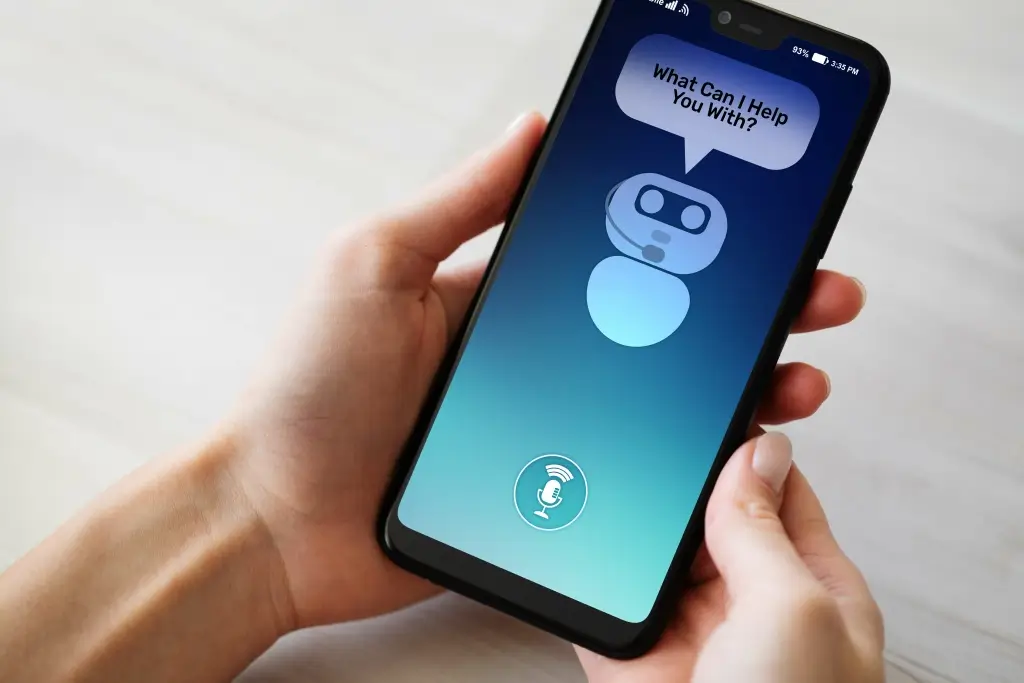
In 2017, LinkedIn expanded its AI capabilities by integrating NLP & NLU into their platform. To learn about the future expectations regarding NLP you can read our Top 5 Expectations Regarding the Future of NLP article. Bharat Saxena has over 15 years of experience in software product development, and has worked in various stages, from coding to managing a product. With BMC, he supports the AMI Ops Monitoring for Db2 product development team. His current active areas of research are conversational AI and algorithmic bias in AI. In this context, another term which is often used as a synonym is Natural Language Understanding (NLU).

The word patterns are identified using methods such as tokenization, stemming, and lemmatization. DST is essential at this stage of the dialogue system and is responsible for multi-turn conversations. Then, a dialogue policy determines what next step the dialogue system makes based on the current state. Finally, the NLG gives a response based on the semantic frame.Now that we’ve seen how a typical dialogue system works, let’s clearly understand NLP, NLU, and NLG in detail.
To pass the test, a human evaluator will interact with a machine and another human at the same time, each in a different room. If the evaluator is not able to reliably tell the difference between the response generated by the machine and the other human, then the machine passes the test and is considered to be exhibiting “intelligent” behavior. From the computer’s point of view, any natural language is a free form text. That means there are no set keywords at set positions when providing an input.
A task called word sense disambiguation, which sits under the NLU umbrella, makes sure that the machine is able to understand the two different senses that the word “bank” is used. All these sentences have the same underlying question, which is to enquire about today’s weather forecast. NLG also encompasses text summarization capabilities that generate summaries from in-put documents while maintaining the integrity of the information. Extractive summarization is the AI innovation powering Key Point Analysis used in That’s Debatable.
NLU is concerned with understanding the meaning and intent behind data, while NLG is focused on generating natural-sounding responses. The computational methods used in machine learning result in a lack of transparency into “what” and “how” the machines learn. This creates a black box where data goes in, decisions go out, and there is limited visibility into how one impacts the other. What’s more, a great deal of computational power is needed to process the data, while large volumes of data are required to both train and maintain a model. Artificial intelligence is critical to a machine’s ability to learn and process natural language. So, when building any program that works on your language data, it’s important to choose the right AI approach.
NLU can be used in many different ways, including understanding dialogue between two people, understanding how someone feels about a particular situation, and other similar scenarios. So, NLU uses computational methods to understand the text and produce a result. Businesses like restaurants, hotels, and retail stores use tickets for customers to report problems with services or products they’ve purchased. Since then, with the help of progress made in the field of AI and specifically in NLP and NLU, we have come very far in this quest. The first successful attempt came out in 1966 in the form of the famous ELIZA program which was capable of carrying on a limited form of conversation with a user.
This is in contrast to NLU, which applies grammar rules (among other techniques) to “understand” the meaning conveyed in the text. In AI, two main branches play a vital role in enabling machines to understand human languages and perform the necessary functions. Across various industries and applications, NLP and NLU showcase their unique capabilities in transforming the way we interact with machines.
Furthermore, NLU enables computer programmes to deduce purpose from language, even if the written or spoken language is flawed. Both NLU and NLP use supervised learning, which means that they train their models using labelled data. For example, it is the process of recognizing and understanding what people say in social media posts. NLP undertakes various tasks such as parsing, speech recognition, part-of-speech tagging, and information extraction. Before booking a hotel, customers want to learn more about the potential accommodations.
Natural language understanding systems let organizations create products or tools that can both understand words and interpret their meaning. By combining their strengths, businesses can create more human-like interactions and deliver personalized experiences that cater to their customers’ diverse needs. This integration of language technologies is driving innovation and improving user experiences across various industries. The algorithms we mentioned earlier contribute to the functioning of natural language generation, enabling it to create coherent and contextually relevant text or speech.
NLUs require specialized skills in the fields of AI and machine learning and this can prevent development teams that lack the time and resources to add NLP capabilities to their applications. The “suggested text” feature used in some email programs is an example of NLG, but the most well-known example today is ChatGPT, the generative AI model based on OpenAI’s GPT models, a type of large language model (LLM). Such applications can produce intelligent-sounding, grammatically correct content and write code in response to a user prompt. Meanwhile, with the help of surface-level inspection, these tasks allow machines to understand and improve the basic framework for processing and analysis. It’s a branch of artificial intelligence where the primary focus is on the interaction between computers and humans with the help of natural language. However, when it comes to handling the requests of human customers, it becomes challenging.
This involves tasks like sentiment analysis, entity linking, semantic role labeling, coreference resolution, and relation extraction. As a result, algorithms search for associations and correlations to infer what the sentence’s most likely meaning is rather than understanding the genuine meaning of human languages. The rise of chatbots can be attributed to advancements in AI, particularly in the fields of natural language processing (NLP), natural language understanding (NLU), and natural language generation (NLG).
As can be seen by its tasks, NLU is the integral part of natural language processing, the part that is responsible for human-like understanding of the meaning rendered by a certain text. One of the biggest differences from NLP is that NLU goes beyond understanding words as it tries to interpret meaning dealing with common human errors like mispronunciations or transposed letters or words. That’s where NLP & NLU techniques work together to ensure that the huge pile of unstructured data is made accessible to AI. Both NLP& NLU have evolved from various disciplines like artificial intelligence, linguistics, and data science for easy understanding of the text.
This is achieved by the training and continuous learning capabilities of the NLU solution. While both understand human language, NLU communicates with untrained individuals to learn and understand their intent. In addition to understanding words and interpreting meaning, NLU is programmed to understand meaning, despite common human errors, such as mispronunciations or transposed letters and words. NLU enables computers to understand the sentiments expressed in a natural language used by humans, such as English, French or Mandarin, without the formalized syntax of computer languages. NLU also enables computers to communicate back to humans in their own languages. Natural language understanding (NLU) is a branch of artificial intelligence (AI) that uses computer software to understand input in the form of sentences using text or speech.
Difference between NLP, NLU, NLG and the possible things which can be achieved when implementing an NLP engine for chatbots. Behind the scenes, sophisticated algorithms like hidden Markov chains, recurrent neural networks, n-grams, decision trees, naive bayes, etc. work in harmony to make it all possible. We are a team of industry and technology experts that delivers business value and growth.
It extracts pertinent details, infers context, and draws meaningful conclusions from speech or text data. While delving deeper into semantic and contextual understanding, NLU builds upon the foundational principles of natural language processing. Its primary focus lies in discerning the meaning, relationships, and intents conveyed by language.
After NLU converts data into a structured set, natural language generation takes over to turn this structured data into a written narrative to make it universally understandable. NLG’s core function is to explain structured data in meaningful sentences humans can understand.NLG systems try to find out how computers can communicate what they know in the best way possible. So the system must first learn what it should say and then determine how it should say it. An NLU system can typically start with an arbitrary piece of text, but an NLG system begins with a well-controlled, detailed picture of the world. If you give an idea to an NLG system, the system synthesizes and transforms that idea into a sentence.
In this case, NLU can help the machine understand the contents of these posts, create customer service tickets, and route these tickets to the relevant departments. This intelligent robotic assistant can also learn from past customer conversations and use this information to improve future responses. For machines, human language, also referred to as natural language, is how humans communicate—most often in the form of text. It comprises the majority of enterprise data and includes everything from text contained in email, to PDFs and other document types, chatbot dialog, social media, etc.
If you want to create robust autonomous machines, then it’s important that you cannot only process the input but also understand the meaning behind the words. Moreover, it is a multi-faceted analysis to understand the context of the data based on the textual environment. With NLU techniques, the system forms connections within the text and use external knowledge. That’s why simple tasks such as sentence structure, syntactic analysis, and order of words are easy.

Natural language, also known as ordinary language, refers to any type of language developed by humans over time through constant repetitions and usages without any involvement of conscious strategies. NLU makes it possible to carry out a dialogue with a computer using a human-based language. This is useful for consumer products or device features, such as voice assistants and speech to text. We’ll also examine when prioritizing one capability over the other is more beneficial for businesses depending on specific use cases. You can foun additiona information about ai customer service and artificial intelligence and NLP. By the end, you’ll have the knowledge to understand which AI solutions can cater to your organization’s unique requirements.
The tokens are then analyzed for their grammatical structure, including the word’s role and different possible ambiguities in meaning. NLP and NLU have unique strengths and applications as mentioned above, but their true power lies in their combined use. Integrating both technologies allows AI systems to process and understand natural language more accurately. In human language processing, NLP and NLU, while visually resembling each other, serve distinct functions. Examining “NLU vs NLP” reveals key differences in four crucial areas, highlighting the nuanced disparities between these technologies in language interpretation.
Now that we understand the basics of NLP, NLU, and NLG, let’s take a closer look at the key components of each technology. These components are the building blocks that work together to enable chatbots to understand, interpret, and generate natural language data. By leveraging these technologies, chatbots can provide efficient and effective customer service and support, freeing up human agents to focus on more complex tasks. It involves tasks like entity recognition, intent recognition, and context management.
Understanding the Detailed Comparison of NLU vs NLP delves into their symbiotic dance, unveiling the future of intelligent communication. NLP stands for neuro-linguistic programming, and it is a type of training that helps people learn how to change the way they think and communicate in order to achieve their goals. Another difference is that NLP breaks and processes language, while NLU provides language comprehension. AIMultiple informs hundreds of thousands of businesses (as per similarWeb) including 60% of Fortune 500 every month.
The future of NLP, NLU, and NLG is very promising, with many advancements in these technologies already being made and many more expected in the future. The OneAI NLU Studio allows developers to combine NLU and NLP features with their applications in reliable and efficient ways. Check out the OneAI Language Studio for yourself and see how easy the implementation of NLU capabilities can be.

Natural language processing and its subsets have numerous practical applications within today’s world, like healthcare diagnoses or online customer service. So, if you’re conversing with a chatbot but decide to stray away for a moment, you would have to start again. However, when it comes to advanced and complex tasks of understanding deeper semantic layers of speech implementing NLP is not a realistic approach. It doesn’t just do basic processing; instead, it comprehends and then extracts meaning from your data. Just by the name, you can tell that the initial goal of Natural Language Processing is processing and manipulation. It emphasizes the need to understand interactions between computers and human beings.
It uses a combinatorial process of analytic output and contextualized outputs to complete these tasks. Natural language generation is another subset of natural language processing. While natural language understanding focuses on computer reading comprehension, natural language generation enables computers to write. NLG is the process of producing a human language text response based on some data input. This text can also be converted into a speech format through text-to-speech services.
Logic is applied in the form of an IF-THEN structure embedded into the system by humans, who create the rules. This hard coding of rules can be used to manipulate the understanding of symbols. Machine learning uses computational methods to train models nlu vs nlp on data and adjust (and ideally, improve) its methods as more data is processed. This tool is designed with the latest technologies to provide sentiment analysis. It helps you grow your business and make changes according to customer feedback.

NLP encompasses input generation, comprehension, and output generation, often interchangeably referred to as Natural Language Understanding (NLU). However, it’s vital to discern the nuanced differences between NLP and NLU. This exploration aims to elucidate the distinctions, delving into the intricacies of NLU vs NLP. However, the grammatical correctness or incorrectness does not always correlate with the validity of a phrase. Think of the classical example of a meaningless yet grammatical sentence “colorless green ideas sleep furiously”. Even more, in the real life, meaningful sentences often contain minor errors and can be classified as ungrammatical.
5 Major Challenges in NLP and NLU.
Posted: Sat, 16 Sep 2023 07:00:00 GMT [source]
This initial step facilitates subsequent processing and structural analysis, providing the foundation for the machine to comprehend and interact with the linguistic aspects of the input data. Sometimes people know what they are looking for but do not know the exact name of the good. In such cases, salespeople in the physical stores used to solve our problem and recommended us a suitable product. In the age of conversational commerce, such a task is done by sales chatbots that understand user intent and help customers to discover a suitable product for them via natural language (see Figure 6). Have you ever wondered how Alexa, ChatGPT, or a customer care chatbot can understand your spoken or written comment and respond appropriately? NLP and NLU, two subfields of artificial intelligence (AI), facilitate understanding and responding to human language.
However, NLG can be used with NLP to produce humanlike text in a way that emulates a human writer. This is done by identifying the main topic of a document and then using NLP to determine the most appropriate way to write the document in the user’s native language. We’ve seen that NLP primarily deals with analyzing the language’s structure and form, focusing on aspects like grammar, word formation, and punctuation. On the other hand, NLU is concerned with comprehending the deeper meaning and intention behind the language. To have a clear understanding of these crucial language processing concepts, let’s explore the differences between NLU and NLP by examining their scope, purpose, applicability, and more.
Both types of training are highly effective in helping individuals improve their communication skills, but there are some key differences between them. NLP offers more in-depth training than NLU does, and it also focuses on teaching people how to use neuro-linguistic programming techniques in their everyday lives. NLU recognizes that language is a complex task made up of many components such as motions, facial expression recognition etc.

It enables the assistant to grasp the intent behind each user utterance, ensuring proper understanding and appropriate responses. From deciphering speech to reading text, our brains work tirelessly to understand and make sense of the world around us. However, our ability to process information is limited to what we already know. Similarly, machine learning involves interpreting information to create knowledge. Understanding NLP is the first step toward exploring the frontiers of language-based AI and ML.
To interpret a text and understand its meaning, NLU must first learn its context, semantics, sentiment, intent, and syntax. Semantics and syntax are of utmost significance in helping check the grammar and meaning of a text, respectively. Though NLU understands unstructured data, part of its core function is to convert text into a structured data set that a machine can more easily consume. Ultimately, we can say that natural language understanding works by employing algorithms and machine learning models to analyze, interpret, and understand human language through entity and intent recognition. This technology brings us closer to a future where machines can truly understand and interact with us on a deeper level. NLG is another subcategory of NLP that constructs sentences based on a given semantic.
A subfield of artificial intelligence and linguistics, NLP provides the advanced language analysis and processing that allows computers to make this unstructured human language data readable by machines. It can use many different methods to accomplish this, from tokenization, lemmatization, machine translation and natural language understanding. NLU is the ability of a machine to understand and process the meaning of speech or text presented in a natural language, that is, the capability to make sense of natural language.
In 2017, LinkedIn expanded its AI capabilities by integrating NLP & NLU into their platform. To learn about the future expectations regarding NLP you can read our Top 5 Expectations Regarding the Future of NLP article. Bharat Saxena has over 15 years of experience in software product development, and has worked in various stages, from coding to managing a product. With BMC, he supports the AMI Ops Monitoring for Db2 product development team. His current active areas of research are conversational AI and algorithmic bias in AI. In this context, another term which is often used as a synonym is Natural Language Understanding (NLU).
The word patterns are identified using methods such as tokenization, stemming, and lemmatization. DST is essential at this stage of the dialogue system and is responsible for multi-turn conversations. Then, a dialogue policy determines what next step the dialogue system makes based on the current state. Finally, the NLG gives a response based on the semantic frame.Now that we’ve seen how a typical dialogue system works, let’s clearly understand NLP, NLU, and NLG in detail.
To pass the test, a human evaluator will interact with a machine and another human at the same time, each in a different room. If the evaluator is not able to reliably tell the difference between the response generated by the machine and the other human, then the machine passes the test and is considered to be exhibiting “intelligent” behavior. From the computer’s point of view, any natural language is a free form text. That means there are no set keywords at set positions when providing an input.
A task called word sense disambiguation, which sits under the NLU umbrella, makes sure that the machine is able to understand the two different senses that the word “bank” is used. All these sentences have the same underlying question, which is to enquire about today’s weather forecast. NLG also encompasses text summarization capabilities that generate summaries from in-put documents while maintaining the integrity of the information. Extractive summarization is the AI innovation powering Key Point Analysis used in That’s Debatable.
NLU is concerned with understanding the meaning and intent behind data, while NLG is focused on generating natural-sounding responses. The computational methods used in machine learning result in a lack of transparency into “what” and “how” the machines learn. This creates a black box where data goes in, decisions go out, and there is limited visibility into how one impacts the other. What’s more, a great deal of computational power is needed to process the data, while large volumes of data are required to both train and maintain a model. Artificial intelligence is critical to a machine’s ability to learn and process natural language. So, when building any program that works on your language data, it’s important to choose the right AI approach.
NLU can be used in many different ways, including understanding dialogue between two people, understanding how someone feels about a particular situation, and other similar scenarios. So, NLU uses computational methods to understand the text and produce a result. Businesses like restaurants, hotels, and retail stores use tickets for customers to report problems with services or products they’ve purchased. Since then, with the help of progress made in the field of AI and specifically in NLP and NLU, we have come very far in this quest. The first successful attempt came out in 1966 in the form of the famous ELIZA program which was capable of carrying on a limited form of conversation with a user.
This is in contrast to NLU, which applies grammar rules (among other techniques) to “understand” the meaning conveyed in the text. In AI, two main branches play a vital role in enabling machines to understand human languages and perform the necessary functions. Across various industries and applications, NLP and NLU showcase their unique capabilities in transforming the way we interact with machines.
Furthermore, NLU enables computer programmes to deduce purpose from language, even if the written or spoken language is flawed. Both NLU and NLP use supervised learning, which means that they train their models using labelled data. For example, it is the process of recognizing and understanding what people say in social media posts. NLP undertakes various tasks such as parsing, speech recognition, part-of-speech tagging, and information extraction. Before booking a hotel, customers want to learn more about the potential accommodations.
Natural language understanding systems let organizations create products or tools that can both understand words and interpret their meaning. By combining their strengths, businesses can create more human-like interactions and deliver personalized experiences that cater to their customers’ diverse needs. This integration of language technologies is driving innovation and improving user experiences across various industries. The algorithms we mentioned earlier contribute to the functioning of natural language generation, enabling it to create coherent and contextually relevant text or speech.
NLUs require specialized skills in the fields of AI and machine learning and this can prevent development teams that lack the time and resources to add NLP capabilities to their applications. The “suggested text” feature used in some email programs is an example of NLG, but the most well-known example today is ChatGPT, the generative AI model based on OpenAI’s GPT models, a type of large language model (LLM). Such applications can produce intelligent-sounding, grammatically correct content and write code in response to a user prompt. Meanwhile, with the help of surface-level inspection, these tasks allow machines to understand and improve the basic framework for processing and analysis. It’s a branch of artificial intelligence where the primary focus is on the interaction between computers and humans with the help of natural language. However, when it comes to handling the requests of human customers, it becomes challenging.
This involves tasks like sentiment analysis, entity linking, semantic role labeling, coreference resolution, and relation extraction. As a result, algorithms search for associations and correlations to infer what the sentence’s most likely meaning is rather than understanding the genuine meaning of human languages. The rise of chatbots can be attributed to advancements in AI, particularly in the fields of natural language processing (NLP), natural language understanding (NLU), and natural language generation (NLG).
As can be seen by its tasks, NLU is the integral part of natural language processing, the part that is responsible for human-like understanding of the meaning rendered by a certain text. One of the biggest differences from NLP is that NLU goes beyond understanding words as it tries to interpret meaning dealing with common human errors like mispronunciations or transposed letters or words. That’s where NLP & NLU techniques work together to ensure that the huge pile of unstructured data is made accessible to AI. Both NLP& NLU have evolved from various disciplines like artificial intelligence, linguistics, and data science for easy understanding of the text.
This is achieved by the training and continuous learning capabilities of the NLU solution. While both understand human language, NLU communicates with untrained individuals to learn and understand their intent. In addition to understanding words and interpreting meaning, NLU is programmed to understand meaning, despite common human errors, such as mispronunciations or transposed letters and words. NLU enables computers to understand the sentiments expressed in a natural language used by humans, such as English, French or Mandarin, without the formalized syntax of computer languages. NLU also enables computers to communicate back to humans in their own languages. Natural language understanding (NLU) is a branch of artificial intelligence (AI) that uses computer software to understand input in the form of sentences using text or speech.
Difference between NLP, NLU, NLG and the possible things which can be achieved when implementing an NLP engine for chatbots. Behind the scenes, sophisticated algorithms like hidden Markov chains, recurrent neural networks, n-grams, decision trees, naive bayes, etc. work in harmony to make it all possible. We are a team of industry and technology experts that delivers business value and growth.
It extracts pertinent details, infers context, and draws meaningful conclusions from speech or text data. While delving deeper into semantic and contextual understanding, NLU builds upon the foundational principles of natural language processing. Its primary focus lies in discerning the meaning, relationships, and intents conveyed by language.
After NLU converts data into a structured set, natural language generation takes over to turn this structured data into a written narrative to make it universally understandable. NLG’s core function is to explain structured data in meaningful sentences humans can understand.NLG systems try to find out how computers can communicate what they know in the best way possible. So the system must first learn what it should say and then determine how it should say it. An NLU system can typically start with an arbitrary piece of text, but an NLG system begins with a well-controlled, detailed picture of the world. If you give an idea to an NLG system, the system synthesizes and transforms that idea into a sentence.
In this case, NLU can help the machine understand the contents of these posts, create customer service tickets, and route these tickets to the relevant departments. This intelligent robotic assistant can also learn from past customer conversations and use this information to improve future responses. For machines, human language, also referred to as natural language, is how humans communicate—most often in the form of text. It comprises the majority of enterprise data and includes everything from text contained in email, to PDFs and other document types, chatbot dialog, social media, etc.
If you want to create robust autonomous machines, then it’s important that you cannot only process the input but also understand the meaning behind the words. Moreover, it is a multi-faceted analysis to understand the context of the data based on the textual environment. With NLU techniques, the system forms connections within the text and use external knowledge. That’s why simple tasks such as sentence structure, syntactic analysis, and order of words are easy.
Natural language, also known as ordinary language, refers to any type of language developed by humans over time through constant repetitions and usages without any involvement of conscious strategies. NLU makes it possible to carry out a dialogue with a computer using a human-based language. This is useful for consumer products or device features, such as voice assistants and speech to text. We’ll also examine when prioritizing one capability over the other is more beneficial for businesses depending on specific use cases. You can foun additiona information about ai customer service and artificial intelligence and NLP. By the end, you’ll have the knowledge to understand which AI solutions can cater to your organization’s unique requirements.
The tokens are then analyzed for their grammatical structure, including the word’s role and different possible ambiguities in meaning. NLP and NLU have unique strengths and applications as mentioned above, but their true power lies in their combined use. Integrating both technologies allows AI systems to process and understand natural language more accurately. In human language processing, NLP and NLU, while visually resembling each other, serve distinct functions. Examining “NLU vs NLP” reveals key differences in four crucial areas, highlighting the nuanced disparities between these technologies in language interpretation.
Now that we understand the basics of NLP, NLU, and NLG, let’s take a closer look at the key components of each technology. These components are the building blocks that work together to enable chatbots to understand, interpret, and generate natural language data. By leveraging these technologies, chatbots can provide efficient and effective customer service and support, freeing up human agents to focus on more complex tasks. It involves tasks like entity recognition, intent recognition, and context management.
Understanding the Detailed Comparison of NLU vs NLP delves into their symbiotic dance, unveiling the future of intelligent communication. NLP stands for neuro-linguistic programming, and it is a type of training that helps people learn how to change the way they think and communicate in order to achieve their goals. Another difference is that NLP breaks and processes language, while NLU provides language comprehension. AIMultiple informs hundreds of thousands of businesses (as per similarWeb) including 60% of Fortune 500 every month.
The future of NLP, NLU, and NLG is very promising, with many advancements in these technologies already being made and many more expected in the future. The OneAI NLU Studio allows developers to combine NLU and NLP features with their applications in reliable and efficient ways. Check out the OneAI Language Studio for yourself and see how easy the implementation of NLU capabilities can be.
Natural language processing and its subsets have numerous practical applications within today’s world, like healthcare diagnoses or online customer service. So, if you’re conversing with a chatbot but decide to stray away for a moment, you would have to start again. However, when it comes to advanced and complex tasks of understanding deeper semantic layers of speech implementing NLP is not a realistic approach. It doesn’t just do basic processing; instead, it comprehends and then extracts meaning from your data. Just by the name, you can tell that the initial goal of Natural Language Processing is processing and manipulation. It emphasizes the need to understand interactions between computers and human beings.
It uses a combinatorial process of analytic output and contextualized outputs to complete these tasks. Natural language generation is another subset of natural language processing. While natural language understanding focuses on computer reading comprehension, natural language generation enables computers to write. NLG is the process of producing a human language text response based on some data input. This text can also be converted into a speech format through text-to-speech services.
Logic is applied in the form of an IF-THEN structure embedded into the system by humans, who create the rules. This hard coding of rules can be used to manipulate the understanding of symbols. Machine learning uses computational methods to train models nlu vs nlp on data and adjust (and ideally, improve) its methods as more data is processed. This tool is designed with the latest technologies to provide sentiment analysis. It helps you grow your business and make changes according to customer feedback.
NLP encompasses input generation, comprehension, and output generation, often interchangeably referred to as Natural Language Understanding (NLU). However, it’s vital to discern the nuanced differences between NLP and NLU. This exploration aims to elucidate the distinctions, delving into the intricacies of NLU vs NLP. However, the grammatical correctness or incorrectness does not always correlate with the validity of a phrase. Think of the classical example of a meaningless yet grammatical sentence “colorless green ideas sleep furiously”. Even more, in the real life, meaningful sentences often contain minor errors and can be classified as ungrammatical.
5 Major Challenges in NLP and NLU.
Posted: Sat, 16 Sep 2023 07:00:00 GMT [source]
This initial step facilitates subsequent processing and structural analysis, providing the foundation for the machine to comprehend and interact with the linguistic aspects of the input data. Sometimes people know what they are looking for but do not know the exact name of the good. In such cases, salespeople in the physical stores used to solve our problem and recommended us a suitable product. In the age of conversational commerce, such a task is done by sales chatbots that understand user intent and help customers to discover a suitable product for them via natural language (see Figure 6). Have you ever wondered how Alexa, ChatGPT, or a customer care chatbot can understand your spoken or written comment and respond appropriately? NLP and NLU, two subfields of artificial intelligence (AI), facilitate understanding and responding to human language.
However, NLG can be used with NLP to produce humanlike text in a way that emulates a human writer. This is done by identifying the main topic of a document and then using NLP to determine the most appropriate way to write the document in the user’s native language. We’ve seen that NLP primarily deals with analyzing the language’s structure and form, focusing on aspects like grammar, word formation, and punctuation. On the other hand, NLU is concerned with comprehending the deeper meaning and intention behind the language. To have a clear understanding of these crucial language processing concepts, let’s explore the differences between NLU and NLP by examining their scope, purpose, applicability, and more.
Both types of training are highly effective in helping individuals improve their communication skills, but there are some key differences between them. NLP offers more in-depth training than NLU does, and it also focuses on teaching people how to use neuro-linguistic programming techniques in their everyday lives. NLU recognizes that language is a complex task made up of many components such as motions, facial expression recognition etc.
It enables the assistant to grasp the intent behind each user utterance, ensuring proper understanding and appropriate responses. From deciphering speech to reading text, our brains work tirelessly to understand and make sense of the world around us. However, our ability to process information is limited to what we already know. Similarly, machine learning involves interpreting information to create knowledge. Understanding NLP is the first step toward exploring the frontiers of language-based AI and ML.
To interpret a text and understand its meaning, NLU must first learn its context, semantics, sentiment, intent, and syntax. Semantics and syntax are of utmost significance in helping check the grammar and meaning of a text, respectively. Though NLU understands unstructured data, part of its core function is to convert text into a structured data set that a machine can more easily consume. Ultimately, we can say that natural language understanding works by employing algorithms and machine learning models to analyze, interpret, and understand human language through entity and intent recognition. This technology brings us closer to a future where machines can truly understand and interact with us on a deeper level. NLG is another subcategory of NLP that constructs sentences based on a given semantic.
A subfield of artificial intelligence and linguistics, NLP provides the advanced language analysis and processing that allows computers to make this unstructured human language data readable by machines. It can use many different methods to accomplish this, from tokenization, lemmatization, machine translation and natural language understanding. NLU is the ability of a machine to understand and process the meaning of speech or text presented in a natural language, that is, the capability to make sense of natural language.

You can foun additiona information about ai customer service and artificial intelligence and NLP. Symbolic AI uses human-readable symbols that represent real-world entities or concepts. Logic is applied in the form of an IF-THEN structure embedded into the system by humans, who create the rules. This hard coding of rules can be used to manipulate the understanding of symbols.

Combined with NLP, which focuses on structural manipulation of language, and NLG, which generates human-like text or speech, these technologies form a comprehensive approach to language processing in AI. The evolution of NLU is a testament to the relentless pursuit of understanding and harnessing the power of human language. Understanding the distinctions between NLP, NLU, and NLG is essential in leveraging their capabilities effectively.
To pass the test, a human evaluator will interact with a machine and another human at the same time, each in a different room. If the evaluator is not able to reliably tell the difference between the response generated by the machine and the other human, then the machine passes the test and is considered to be exhibiting “intelligent” behavior. Some are centered directly on the models and their outputs, others on second-order concerns, such as who has access to these systems, and how training them impacts the natural world.
NLU plays a pivotal role in converting natural language into a structured format, facilitating tasks such as sentiment analysis and entity recognition. In this comprehensive blog, the significance of NLU is explored along with its distinctions from natural language processing (NLP) and natural language generation (NLG). Intelligent language processing is at the core of NLU, allowing machines to understand the intentions and nuances conveyed in human language.
Understanding when to favor NLU or NLP in specific use cases can lead to more profitable solutions for organizations. Semantics utilizes word embeddings and semantic role labeling to capture meaning and relationships between words. Word embeddings represent words as numerical vectors, enabling machines to understand the similarity and context of words. Semantic role labeling identifies the roles of words in a sentence, such as subject, object, or modifier, facilitating a deeper understanding of sentence meaning. Syntax involves sentence parsing and part-of-speech tagging to understand sentence structure and word functions. It helps machines identify the grammatical relationships between words and phrases, allowing for a better understanding of the overall meaning.
Through the process of parsing, NLU breaks down unstructured textual data into organized and meaningful components, unlocking a treasure trove of insights hidden within the words. This capability goes far beyond merely recognizing words and delves into the nuances of language, including context, intent, and emotions. Throughout the years various attempts at processing natural language or English-like sentences presented to computers have taken place at varying degrees of complexity.
It has the potential to not only shorten support cycles but make them more accurate by being able to recommend solutions or identify pressing priorities for department teams. The business landscape is becoming increasingly data-driven, and text-based information constitutes a significant portion of this data. NLU’s profound impact lies in its ability to derive meaningful knowledge from textual data, granting businesses a competitive edge in understanding customer feedback, market trends, and emerging sentiments. The value of understanding these granular sentiments cannot be overstated, especially in a competitive business landscape.
By employing semantic similarity metrics and concept embeddings, businesses can map customer queries to the most relevant documents in their database, thereby delivering pinpoint solutions. If users deviate from the computer’s prescribed way of doing things, it can cause an error message, a wrong response, or even inaction. However, solutions like the Expert.ai Platform have language disambiguation capabilities to extract meaningful insight from unstructured language data. Through a multi-level text analysis of the data’s lexical, grammatical, syntactical, and semantic meanings, the machine will provide a human-like understanding of the text and information that’s the most useful to you. These components work together to enable machines to approach human language with depth and nuance.
As a result, businesses can offer round-the-clock support, ensuring customer satisfaction and loyalty. In advanced NLU, the advent of Transformer architectures has been revolutionary. These models leverage attention mechanisms to weigh the importance of different sentence parts differently, thereby mimicking how humans focus on specific words when understanding language. For instance, in sentiment analysis models for customer reviews, attention mechanisms can guide the model to focus on adjectives such as ‘excellent’ or ‘poor,’ thereby producing more accurate assessments. Natural language understanding (NLU) is a technical concept within the larger topic of natural language processing. NLU is the process responsible for translating natural, human words into a format that a computer can interpret.
Natural Language Understanding (NLU) is an important part of AI, with numerous real-life applications such as AI assistants, email filtering, content recommendation, customer support, and many more. NLU is used to analyze the natural language content in workplace communications, identifying potential risks, compliance issues, or inappropriate language. The inclusion of NLU in IVR systems makes self-service and call routing more intuitive and responsive to natural language queries. However, can machines understand directly what the user meant even after comprehending tokenization and part of speech? NLU is a part of NLP, so I have explained the steps that will help computers understand the intent and meaning of a sentence.
NLUs require specialized skills in the fields of AI and machine learning and this can prevent development teams that lack the time and resources to add NLP capabilities to their applications. Natural Language Processing(NLP) is a subset of Artificial intelligence which involves communication between a human and a machine using a natural language than a coded or byte language. It provides the ability to give instructions to machines in a more easy and efficient manner. The two most common approaches are machine learning and symbolic or knowledge-based AI, but organizations are increasingly using a hybrid approach to take advantage of the best capabilities that each has to offer.
That means there are no set keywords at set positions when providing an input. Latin, English, Spanish, and many other spoken languages are all languages that evolved naturally over time. Learn conversational AI skills and get certified on the Kore.ai Experience Optimization (XO) Platform. Where NLP helps machines read and process text and NLU helps them understand text, NLG or Natural Language Generation helps machines write text. There’s a potential solution to the unique challenge with bi-alphabetical languages like Serbian, too. Serbian is quite similar to Croatian, so combining data from the two languages in an appropriate way has proven to be very helpful with training AI.
This is done by identifying the main topic of a document and then using NLP to determine the most appropriate way to write the document in the user’s native language. In this case, the person’s objective is to purchase tickets, and the ferry is the most likely form of travel as the campground is on an island. NLU makes it possible to carry out a dialogue with a computer using a human-based language. This is useful for consumer products or device features, such as voice assistants and speech to text. This book is for managers, programmers, directors – and anyone else who wants to learn machine learning. Gone are the days when chatbots could only produce programmed and rule-based interactions with their users.
The advent of deep learning has opened up new possibilities for NLU, allowing machines to capture intricate patterns and contexts in language like never before. Neural networks like recurrent neural networks (RNNs), long short-term memory (LSTM) networks, and Transformers have empowered machines to understand and generate human language with unprecedented depth and accuracy. Models like BERT and Whisper have set new standards in NLU, propelling the field forward and inspiring further advancements in AI language processing. It delves into the nuances, sentiments, intents, and layers of meaning in human language, enabling machines to grasp and generate human-like text. Natural language processing (NLP) is a field of computer science, artificial intelligence, and linguistics concerned with the interactions between machines and human (natural) languages.
Considering the complexity of language, creating a tool that bypasses significant limitations such as interpretations and context can be ambitious and demanding. Artificial Intelligence (AI) is the creation of intelligent software or hardware to replicate human behaviors in learning and problem-solving areas. Worldwide revenue from the AI market is forecasted to reach USD 126 billion by 2025, with AI expected to contribute over 10 percent to the GDP in North America and Asia regions by 2030.
Such applications can produce intelligent-sounding, grammatically correct content and write code in response to a user prompt. You can type text or upload whole documents and receive translations in dozens of languages using machine translation tools. Google Translate even includes optical character recognition (OCR) software, which allows machines to extract text from images, read and translate it. NLU enhances IVR systems by allowing users to interact with the phone system via voice, converting spoken words into text, and parsing the grammatical structure to determine the caller’s intent. It also aids in understanding user intent by analyzing terms and phrases entered into a website’s search bar, providing insights into what customers are looking for. Compositional semantics involves grouping sentences and understanding their collective meaning.
Many platforms also support built-in entities , common entities that might be tedious to add as custom values. For example for our check_order_status intent, it would be frustrating to input all the days of the year, so you just use a built in date entity type. Entities or slots, are typically pieces of information that you want to capture from a users. In our previous example, we might have a user intent of shop_for_item but want to capture what kind of item it is. There are many NLUs on the market, ranging from very task-specific to very general.
Machines may be able to read information, but comprehending it is another story. For example, “moving” can mean physically moving objects or something emotionally resonant. Additionally, some AI struggles with filtering through inconsequential words to find relevant information. When people talk to each other, they can easily understand and gloss over mispronunciations, stuttering, or colloquialisms.
For example, programming languages including C, Java, Python, and many more were created for a specific reason. We resolve this issue by using Inverse Document Frequency, which is high if the word is rare and low if the word is common across the corpus. And we’re proud to say we’re one of them — offering multilingual AI in 109 languages, including Arabic, Hindi and Mandarin. Read on to find out how leading financial service provider TransferGo serves their customers in Russian, Ukrainian, and more.
He led technology strategy and procurement of a telco while reporting to the CEO. He has also led commercial growth of deep tech company Hypatos that reached a 7 digit annual recurring revenue and a 9 digit valuation from 0 within 2 years. Cem’s work in Hypatos was covered by leading technology publications like TechCrunch and Business Insider.
By combining NLU with NLP and NLG, organizations can unlock the full potential of language processing in AI, enhancing communication and driving innovation across various industries. With AI applications on the rise, AI technologies like NLU, NLP, and NLG play a vital role in unlocking the true potential of language processing. Organizations that leverage these language technologies effectively can gain a competitive advantage in data analysis, communication, and decision-making. By embracing NLU, NLP, and NLG, organizations can harness the power of language technology to drive AI success and revolutionize industries in the process. Information retrieval systems heavily rely on NLU to accurately retrieve relevant information based on user queries. By understanding the meaning and intent behind user input, NLU algorithms can filter through vast amounts of data and provide users with the most relevant and timely information.
Understanding these distinctions is essential in leveraging their capabilities effectively. If humans find it challenging to develop perfectly aligned interpretations of human language because of these congenital linguistic challenges, machines will similarly have trouble dealing with such unstructured data. With NLU, even the smallest language details humans understand can be applied to technology. Additionally, NLU systems can use machine learning algorithms to learn from past experience and improve their understanding of natural language. One of the most compelling applications of NLU in B2B spaces is sentiment analysis. Utilizing deep learning algorithms, businesses can comb through social media, news articles, & customer reviews to gauge public sentiment about a product or a brand.
Embracing NLU is not merely an option but a necessity for enterprises seeking to thrive in an increasingly interconnected and data-rich world. When it comes to achieving AI success in various applications, leveraging Natural Language Understanding (NLU), Natural Language Processing (NLP), and Natural Language Generation (NLG) is crucial. These language technologies empower machines to comprehend, process, and generate human language, unlocking possibilities in chatbots, virtual assistants, data analysis, sentiment analysis, and more. By harnessing the power of NLU, NLP, and NLG, organizations can gain meaningful insights and effective communication from unstructured language data, propelling their AI capabilities to new heights. NLU utilizes various NLP technologies to process and understand human language intelligently.
When it comes to conversational AI, the critical point is to understand what the user says or wants to say in both speech and written language. While both understand human language, NLU communicates with untrained individuals to nlu in ai learn and understand their intent. In addition to understanding words and interpreting meaning, NLU is programmed to understand meaning, despite common human errors, such as mispronunciations or transposed letters and words.

Automated reasoning is a subfield of cognitive science that is used to automatically prove mathematical theorems or make logical inferences about a medical diagnosis. It gives machines a form of reasoning or logic, and allows them to infer new facts by deduction. NLG also encompasses text summarization capabilities that generate summaries from in-put documents while maintaining the integrity of the information. Extractive summarization is the AI innovation powering Key Point Analysis used in That’s Debatable. Looking to stay up-to-date on the latest trends and developments in the data science field?
You’re falling behind if you’re not using NLU tools in your business’s customer experience initiatives. Over 60% say they would purchase more from companies they felt cared about them. Part of this caring is–in addition to providing great customer service and meeting expectations–personalizing the experience for each individual.
Using Watson NLU to help address bias in AI sentiment analysis.
Posted: Fri, 12 Feb 2021 08:00:00 GMT [source]
It employs AI technology and algorithms, supported by massive data stores, to interpret human language. In sentiment analysis, multi-dimensional sentiment metrics offer an unprecedented depth of understanding that transcends the rudimentary classifications of positive, negative, or neutral feelings. Traditional sentiment analysis tools have limitations, often glossing over the intricate spectrum of human emotions and reducing them to overly simplistic categories. While such approaches may offer a general overview, they miss the finer textures of consumer sentiment, potentially leading to misinformed strategies and lost business opportunities.

Sentiment analysis is crucial for understanding the emotions or attitudes conveyed in the language. This feature allows NLU systems to interpret moods, opinions, and feelings expressed in text or speech, which is vital in customer service and social media monitoring. This involves grasping the overall meaning of a sentence or conversation, rather than just processing individual words.

Sentihood is a dataset for targeted aspect-based sentiment analysis (TABSA), which aims
to identify fine-grained polarity towards a specific aspect. The dataset consists of 5,215 sentences,
3,862 of which contain a single target, and the remainder multiple targets. All the big cloud players offer sentiment analysis tools, as do the major customer support platforms and marketing vendors. Conversational AI vendors also include sentiment analysis features, Sutherland says.
Alternatively, you could detect language in texts automatically with a language classifier, then train a custom sentiment analysis model to classify texts in the language of your choice. Many emotion detection systems use lexicons (i.e. lists of words and the emotions they convey) or complex machine learning algorithms. Expert.ai employed Sentiment Analysis to understand customer requests and direct users more quickly to the services they need. For example, thanks to expert.ai, customers don’t have to worry about selecting the “right” search expressions, they can search using everyday language. To truly understand, we must know the definitions of words and sentence structure, along with syntax, sentiment and intent – refer back to our initial statement on texting.

Now, we will use the Bag of Words Model(BOW), which is used to represent the text in the form of a bag of words,i.e. The grammar and the order of words in a sentence are not given any importance, instead, multiplicity,i.e. (the number of times a word occurs in a document) is the main point of concern. It is a data visualization technique used to depict text in such a way that, the more frequent words appear enlarged as compared to less frequent words.
With semi-supervised learning, there’s a combination of automated learning and periodic checks to make sure the algorithm is getting things right. Sentiment analysis is a technique used in NLP to identify sentiments in text data. NLP models enable computers to understand, interpret, and generate human language, making them invaluable across numerous industries and applications. Advancements in AI and access to large datasets have significantly improved NLP models’ ability to understand human language context, nuances, and subtleties. Sentiment analysis is the process of classifying whether a block of text is positive, negative, or neutral.

So, the question isn’t really whether or not natural language processing and sentiment analysis could be useful for you. It’s simply a question of how you can make sure that your NLP project is a success and produces the best possible results. Much like social media monitoring, this can greatly reduce the frustration that is often the result of slow response times when it comes to customer complaints.
If you prefer to create your own model or to customize those provided by Hugging Face, PyTorch and Tensorflow are libraries commonly used for writing neural networks. Overall, these algorithms highlight the need for automatic pattern recognition and extraction in subjective and objective task. We will evaluate our model using various metrics such as Accuracy Score, Precision Score, Recall Score, Confusion Matrix and create a roc curve to visualize how our model performed. And then, we can view all the models and their respective parameters, mean test score and rank as GridSearchCV stores all the results in the cv_results_ attribute. Stopwords are commonly used words in a sentence such as “the”, “an”, “to” etc. which do not add much value.
Once training has been completed, algorithms can extract critical words from the text that indicate whether the content is likely to have a positive or negative tone. When new pieces of feedback come through, these can easily be analyzed by machines using NLP technology without human intervention. At the core of sentiment analysis is NLP – natural language processing technology uses algorithms to give computers access to unstructured text data so they can make sense out of it.
First, you’ll need to get your hands on data and procure a dataset which you will use to carry out your experiments. Uncover trends just as they emerge, or follow long-term market leanings through analysis of formal market reports and business journals. Social media and brand monitoring offer us immediate, unfiltered, and invaluable information on customer sentiment, but you can also put this analysis to work on surveys and customer support interactions. If you are new to sentiment analysis, then you’ll quickly notice improvements. For typical use cases, such as ticket routing, brand monitoring, and VoC analysis, you’ll save a lot of time and money on tedious manual tasks. The second and third texts are a little more difficult to classify, though.
The goal that Sentiment mining tries to gain is to be analysed people’s opinions in a way that can help businesses expand. It focuses not only on polarity (positive, negative & neutral) but also on emotions (happy, sad, angry, etc.). It uses various Natural Language Processing algorithms such as Rule-based, Automatic, and Hybrid. Sentiment analysis can be used on any kind of survey – quantitative and qualitative – and on customer support interactions, to understand the emotions and opinions of your customers. Tracking customer sentiment over time adds depth to help understand why NPS scores or sentiment toward individual aspects of your business may have changed.
Sentiment analysis also gained popularity due to its feature to process large volumes of NPS responses and obtain consistent results quickly. Sentiment analysis is easy to implement using python, because there are a variety of methods available that are suitable for this task. It remains an interesting and valuable way of analyzing textual data for businesses of all kinds, and provides a good foundational gateway for developers getting started with natural language processing. Its value for businesses reflects the importance of emotion across all industries – customers are driven by feelings and respond best to businesses who understand them. Typically SA models focus on polarity (positive, negative, neutral) as a go-to metric to gauge sentiment.

As we have already discussed, an NLPs AI model has to be fairly advanced in order to begin to identify the sentiment and emotional message expressed within a text. Some sentences are relatively straightforward, but the context and nuance of other phrases can be incredibly challenged to analyze. If you’re only concerned with the polarity of text, then your sentiment analysis will rely on a grading system to analyze your text. This might be sufficient and most appropriate for use cases where you are processing relatively simple sentences or multiple choice answers to surveys or feedback.
Sentiment analysis allows you to train an AI model that will look out for thoughts and messages surrounding particular topics or areas. To monitor in real-time all of the conversations that relate to your brand and image. Our algorithm analyzes the text to identify the adverbs and adjectives that are modifiers of meaning within a text.
On the other hand, machine learning approaches use algorithms to draw lessons from labeled training data and make predictions on new, unlabeled data. These methods use unsupervised learning, which uses topic modeling and clustering to identify sentiments, and supervised learning, where models are trained on annotated datasets. Using algorithms and methodologies, sentiment analysis examines text data to determine the underlying sentiment.
This means that your work will not suffer from the silo effect that is the undoing of many NLP projects. Understanding how your customers feel about each of these key areas can help you to reduce your churn rate. Research from Bain & Company has shown that increasing customer retention rates by as little as 5 percent can increase your profits by anywhere from 25 to 95 percent. In many ways, you can think of the distinctions between step 1 and 2 as being the differences between old Facebook and new Facebook (or, I guess we should now say Meta). At first, you could only interact with someone’s post by giving them a thumbs up. Which essentially meant that you could only react in a positive way (thumbs up) or neutral way (no reaction).

For example, consulting giant Genpact uses sentiment analysis with its 100,000 employees, says Amaresh Tripathy, the company’s global leader of analytics. “We advise our clients to look there next since they typically need sentiment analysis as part of document ingestion and mining or the customer experience process,” Evelson says. The Obama administration used sentiment analysis to measure public opinion. The World Health Organization’s Vaccine Confidence Project uses sentiment analysis as part of its research, looking at social media, news, blogs, Wikipedia, and other online platforms. The Hedonometer also uses a simple positive-negative scale, which is the most common type of sentiment analysis. Here are the probabilities projected on a horizontal bar chart for each of our test cases.
Sentiment analysis can be applied to countless aspects of business, from brand monitoring and product analytics, to customer service and market research. By incorporating it into their existing systems and analytics, leading brands (not to mention entire cities) are able to work faster, with more accuracy, toward more useful ends. Bing Liu is a thought leader in the field of machine learning and has written a book about sentiment analysis and opinion mining. You can analyze online reviews of your products and compare them to your competition.
If you’ve made it this far then it’s fair to say that there’s a strong possibility that you’re interested in exploring the benefits that Lettria’s sentiment analysis could bring to your project or organization. It might be because you’re frustrated with your existing NLP project or you’re only beginning to explore the world of natural language processing. Open-ended questions have long been a nightmare for surveys and feedback, but sentiment analysis solves this problem by allowing you to process every bit of textual data that you receive. Learn more about how to improve customer service with sentiment analysis. What’s more, sentiment analysis can help you to filter incoming customer support tickets and ensure that they are labelled correctly, passed on to the appropriate team or department, and assigned the correct level of urgency.
It is also highly customizable as it includes other NLP tools such as part-of-speech tagging and noun phrase extraction. This enables users to use TextBlob for a variety of natural language processing tasks beyond sentiment analysis. For deep learning, sentiment analysis can be done with nlp sentiment transformer models such as BERT, XLNet, and GPT3. We first need to generate predictions using our trained model on the ‘X_test’ data frame to evaluate our model’s ability to predict sentiment on our test dataset. After this, we will create a classification report and review the results.
5 “Best” NLP Courses & Certifications (March .
Posted: Fri, 01 Mar 2024 08:00:00 GMT [source]
Now, imagine the responses come from answers to the question What did you DISlike about the event? The negative in the question will make sentiment analysis change altogether. Most people would say that sentiment is positive for the first one and neutral for the second one, right? All predicates (adjectives, verbs, and some nouns) should not be treated the same with respect to how they create sentiment. In the prediction process (b), the feature extractor is used to transform unseen text inputs into feature vectors. These feature vectors are then fed into the model, which generates predicted tags (again, positive, negative, or neutral).
Usually, when analyzing sentiments of texts you’ll want to know which particular aspects or features people are mentioning in a positive, neutral, or negative way. Machine learning and deep learning are what’s known as “black box” approaches. Because they train themselves over time based only on the data used to train them, there is no transparency into how or what they learn. NLTK sentiment analysis is considered to be reasonably accurate, especially when used with high-quality training data and when tuned for a specific domain or task. However, it is important to keep in mind that sentiment analysis is not a perfect science, and there will always be some degree of subjectivity and error involved in the process. We would recommend Python as it is known for its ease of use and versatility, making it a popular choice for sentiment analysis projects that require extensive data preprocessing and machine learning.
That’s where natural language processing with sentiment analysis can ensure that you are extracting every bit of possible knowledge and information from social media. This first step essentially allows Lettria to carry out the graded sentiment analysis and polarity of text analysis that we discussed in the previous section. The second step is where we start to process the context and the real emotion expressed within the text. This obviously presents a number of monumental challenges and understanding and interpreting the emotional meaning behind a piece of text is not easy.
WordNetLemmatizer – used to convert different forms of words into a single item but still keeping the context intact. Now, let’s get our hands dirty by implementing Sentiment Analysis, which will predict the sentiment of a given statement. As we humans communicate with each other in a way that we call Natural Language which is easy for us to interpret but it’s much more complicated and messy if we really look into it. And, the third one doesn’t signify whether that customer is happy or not, and hence we can consider this as a neutral statement.
Approaches based on deep learning Long Short-Term Memory (LSTM) networks and Bidirectional Encoder Representations from Transformers (BERT), two deep learning models, have demonstrated outstanding performance in sentiment analysis. These models capture the dependencies between words and sentences, which learn hierarchical representations of text. They are exceptional in identifying intricate sentiment patterns and context-specific sentiments. In today’s data-driven world, understanding and interpreting the sentiment of text data is a crucial task. Whether you want to gauge public opinion about a product, analyze customer reviews, or track social media sentiment, Sentiment Analysis using Natural Language Processing (NLP) is a powerful technique that can provide valuable insights.
Semantic analysis, on the other hand, goes beyond sentiment and aims to comprehend the meaning and context of the text. It seeks to understand the relationships between words, phrases, and concepts in a given piece of content. Semantic analysis considers the underlying meaning, intent, and the way different elements in a sentence relate to each other.
Hybrid systems combine the desirable elements of rule-based and automatic techniques into one system. One huge benefit of these systems is that results are often more accurate.
Businesses can better measure consumer satisfaction, pinpoint problem areas, and make educated decisions when they know whether the mood expressed is favorable, negative, or neutral. Sentiment analysis can examine various text data types, including social media posts, product reviews, survey replies, and correspondence with customer service representatives. Sentiment Analysis, also known as Opinion Mining, is the process of determining the sentiment or emotional tone expressed in a piece of text. The goal is to classify the text as positive, negative, or neutral, and sometimes even categorize it further into emotions like happiness, sadness, anger, etc. Sentiment Analysis has a wide range of applications, from market research and social media monitoring to customer feedback analysis. Aspect-based sentiment analysis is when you focus on opinions about a particular aspect of the services that your business offers.
Scikit-Learn provides a neat way of performing the bag of words technique using CountVectorizer. But first, we will create an object of WordNetLemmatizer and then we will perform the transformation. Because, without converting to lowercase, it will cause an issue when we will create vectors of these words, as two different vectors will be created for the same word which we don’t want to. Now, we will concatenate these two data frames, as we will be using cross-validation and we have a separate test dataset, so we don’t need a separate validation set of data.
“Deep learning uses many-layered neural networks that are inspired by how the human brain works,” says IDC’s Sutherland. This more sophisticated level of sentiment analysis can look at entire sentences, even full conversations, to determine emotion, and can also be used to analyze voice and video. Rule-based and machine-learning techniques are combined in hybrid approaches.

For example, using sentiment analysis to automatically analyze 4,000+ open-ended responses in your customer satisfaction surveys could help you discover why customers are happy or unhappy at each stage of the customer journey. Emotion detection sentiment analysis allows you to go beyond polarity to detect emotions, like happiness, frustration, anger, and sadness. Learn more about how sentiment analysis works, its challenges, and how you can use sentiment analysis to improve processes, decision-making, customer satisfaction and more. When the banking group wanted a new tool that brought customers closer to the bank, they turned to expert.ai to create a better user experience. All these models are automatically uploaded to the Hub and deployed for production. You can use any of these models to start analyzing new data right away by using the pipeline class as shown in previous sections of this post.
The automated sentiment extraction process from movie reviews or tweets can prove really helpful for businesses in improving their products based on customer’s reviews and feedback with much efficiency and effectivness. BERT (Bidirectional Encoder Representations from Transformers) is a deep learning model for natural language processing developed by Google. BERT has achieved trailblazing results in many language processing tasks due to its ability to understand the context in which words are used. BERT is pre-trained on large amounts of text data and can be fine-tuned on specific tasks, making it a powerful tool for sentiment analysis and other natural language processing tasks.
Or identify positive comments and respond directly, to use them to your benefit. Not only do brands have a wealth of information available on social media, but across the internet, on news sites, blogs, forums, product reviews, and more. Again, we can look at not just the volume of mentions, but the individual and overall quality of those mentions. Most marketing departments are already tuned into online mentions as far as volume – they measure more chatter as more brand awareness.
Since rule-based systems often require fine-tuning and maintenance, they’ll also need regular investments. Looking at the results, and courtesy of taking a deeper look at the reviews via sentiment analysis, we can draw a couple interesting conclusions right off the bat. But TrustPilot’s results alone fall short if Chewy’s goal is to improve its services. This perfunctory overview fails to provide actionable insight, the cornerstone, and end goal, of effective sentiment analysis.
Rather than just three possible answers, sentiment analysis now gives us 10. The scale and range is determined by the team carrying out the analysis, depending on the level of variety and insight they need. Because evaluation of sentiment analysis is becoming more and more task based, each implementation needs a separate training model to get a more accurate representation of sentiment for a given data set. Sentiment analysis has moved beyond merely an interesting, high-tech whim, and will soon become an indispensable tool for all companies of the modern age. Ultimately, sentiment analysis enables us to glean new insights, better understand our customers, and empower our own teams more effectively so that they do better and more productive work.
Automatic methods, contrary to rule-based systems, don’t rely on manually crafted rules, but on machine learning techniques. A sentiment analysis task is usually modeled as a classification problem, whereby a classifier is fed a text and returns a category, e.g. positive, negative, or neutral. For example, say you’re a property management firm and want to create a repair ticket system for tenants based on a narrative intake form on your website. Machine learning-based systems would sort words used in service requests for “plumbing,” “electrical” or “carpentry” in order to eventually route them to the appropriate repair professional. SpaCy is another Python library for NLP that includes pre-trained word vectors and a variety of linguistic annotations. You can foun additiona information about ai customer service and artificial intelligence and NLP. It can be used in combination with machine learning models for sentiment analysis tasks.
Sentiment analysis–also known as conversation mining– is a technique that lets you analyze opinions, sentiments, and perceptions. In a business context, Sentiment analysis enables organizations to understand their customers better, earn more revenue, and improve their products and services based on customer feedback. We performed two different tasks during this project, Binary/Multi-class Sentiment Analysis and Movies Recommendation system. During seniment analysis task, we tried both conventional Machine Learning algorithms (Logistic Regression, Random Forest) as well as current state-of-the-art deep learning based NLP methods (RNN Baseline, AvgNet, CNet). We observed that both types of methods perform pretty effective with reasonable results and accuracy. Also, the automated wordcloud plots give valuable insights about the sentiment present in the used datasets.
There are more than 3.5 billion active social media users; that’s 45% of the world’s population. Every minute users send over 500,000 Tweets and post 510,000 Facebook comments, and a large amount of these messages contain valuable business insights about how customers feel towards products, brands and services. NLPs have now reached the stage where they can not only perform large-scale analysis and extract insights from unstructured data (syntactic analysis), but also perform these tasks in real-time. With the ability to customize your AI model for your particular business or sector, users are able to tailor their NLP to handle complex, nuanced, and industry-specific language.